

Small Attic Mold Remediation After Secondary Roof Leak – University Park, FL 34201
Small Attic Mold Remediation After Secondary Roof Leak – University Park, FL 34201
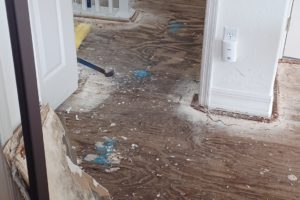
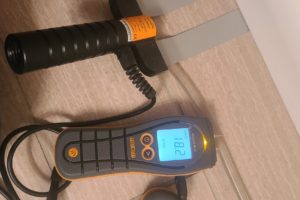
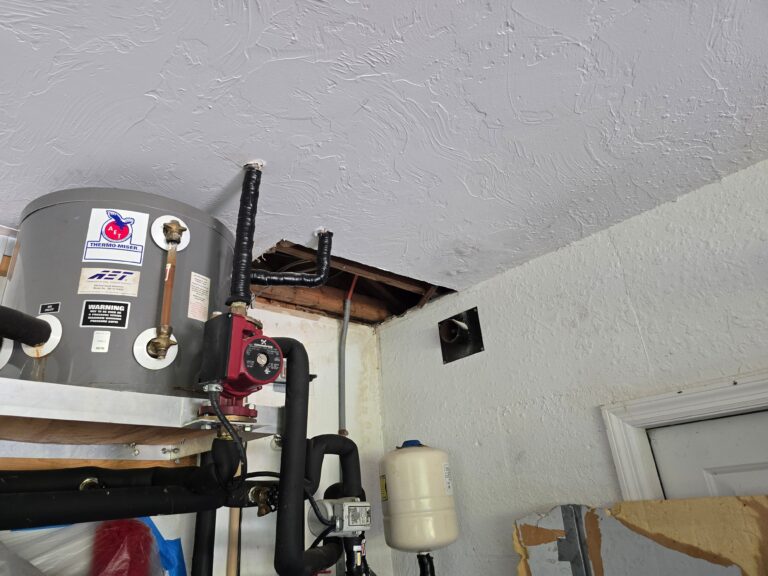
Garage mold remediation
Project Quick Facts
Location
University Park, Florida
Service
The localized mold condition was remediated and sealed, and inspection of the remaining accessible attic/crawl-space areas found no evidence of additional water intrusion or mold-related conditions
Property
Home
Cause
Roof Leak
PRV
Post Remediation Testing passed
Short Answer
Does mold in the attic affect the air I am breathing inside my house?
Not necessarily. Finding mold in an attic or other separated building cavity does not automatically mean mold is affecting the air in the occupied living space. The significance depends on factors such as the location and extent of contamination, air pathways between the attic and living areas, HVAC configuration, pressure relationships, and whether there is evidence that contamination has migrated beyond the affected cavity.
A localized attic condition should therefore be evaluated rather than automatically treated as whole-home contamination.
Inspection & Findings
Inspection & Findings
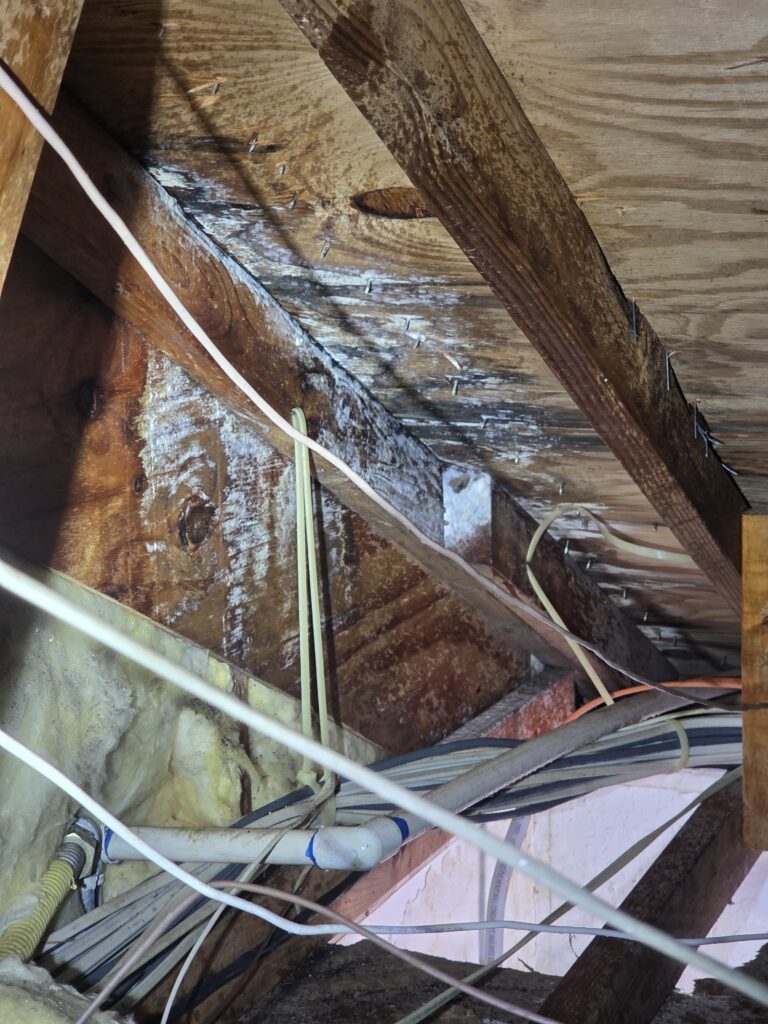
Inspection identified evidence of moisture-related damage associated with the secondary roof leak and a localized area of mold contamination.
The affected area measured less than 10 square feet.
Because mold was visible on structural wood components, the surrounding building cavity was evaluated to determine whether conditions extended beyond the initially identified area.
The inspection did not indicate that the residence required broad demolition or whole-home mold remediation.
Instead, the findings supported a localized remediation strategy focused on the actual affected materials.
Restoration Timeline
Remediation Timeline
1. Moisture and Mold Evaluation
The affected building cavity was inspected to evaluate the apparent roof-leak area, visible mold contamination, and surrounding materials.
2. Extent of Contamination Determined
The mold-related condition was determined to involve a relatively small area of less than 10 square feet.
3. Targeted Mold Remediation
The affected area was remediated without unnecessarily expanding demolition or treatment into unaffected portions of the structure.
4. Treatment and Sealing
Following remediation, the treated area was sealed as part of the restoration process.
5. Additional Building-Cavity Inspection
Because of concerns that the roof leak or similar moisture conditions could exist elsewhere, the remaining accessible attic/crawl-space areas were inspected.
6. No Additional Conditions Identified
The additional inspection found no evidence of another active water-intrusion condition or additional mold-related areas, supporting the conclusion that the identified problem was localized.
Scope Highlights
- Secondary roof leak evaluation
- Less than 10 square feet of mold contamination
- Localized attic/building-cavity mold remediation
- Treatment of affected structural materials
- Sealing of remediated area
- Inspection for additional water intrusion
- Inspection for additional mold-related conditions
- No additional affected areas identified
- Targeted remediation approach
- Avoidance of unnecessary demolition and remediation
- Residential mold and moisture assessment
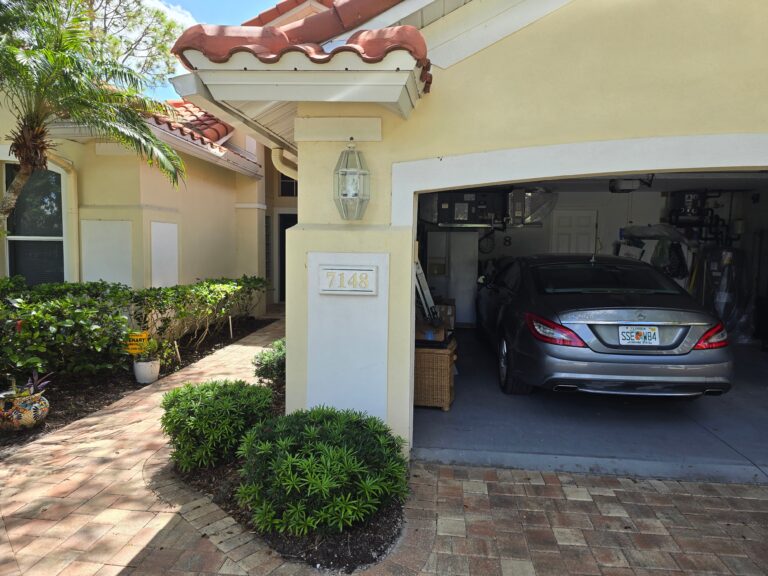
Project Gallery
Frequently Asked Questions
Frequently Asked Questions
Does attic mold mean my entire house has mold?
No. Mold can be localized to an attic because of a roof leak, condensation, elevated humidity, ventilation problems, or another moisture source. The surrounding structure should be evaluated before assuming other portions of the home are affected.
Can attic mold get into the living space?
It can under certain conditions. Air pathways, HVAC equipment or duct leakage, pressure differences, and openings between the attic and occupied space can potentially allow particulate movement. However, the presence of attic mold alone does not establish that this is occurring.
Does a small area of attic mold require whole-home remediation?
Not automatically. The remediation scope should be based on the extent and location of contamination and the underlying moisture condition, not simply on the fact that mold was discovered.
Why inspect the rest of the attic after finding one mold area?
Because the visible mold may be evidence of a larger roof, condensation, or moisture problem. Inspecting surrounding areas helps determine whether the condition is truly localized.
Do you have to replace every piece of wood that has mold on it?
No. Depending upon the material and its condition, some structural materials can be appropriately remediated rather than removed. Materials that are deteriorated, structurally compromised, or otherwise unsuitable for restoration may require replacement.
Should the roof leak be repaired before mold remediation?
The moisture source needs to be identified and corrected as part of resolving the problem. Remediating mold without addressing continuing water intrusion can allow the condition to return.
Can you tell whether attic mold is affecting indoor air just by looking at it?
No. A visual inspection can establish the presence and apparent extent of visible contamination, but it cannot by itself establish what occupants are being exposed to within the living space.
Need Mold Remediation in University Park or Sarasota?
ServiceMaster SRQ provides professional mold remediation, water-damage restoration, moisture assessment, HVAC and air-duct cleaning, and specialty environmental cleaning throughout Sarasota, University Park, Bradenton, and surrounding communities.
Finding mold does not automatically mean a homeowner needs an enormous remediation project. The first objective should be determining what caused the condition, how far it extends, and what actually needs to be remediated.
Call ServiceMaster SRQ at 941-377-2455 to discuss mold or moisture conditions in your home.
"Key Takeaway Mold in an attic does not automatically mean there is mold throughout the house—or that occupants are necessarily breathing mold originating from the attic. An attic is a separate building cavity, although it is not necessarily completely isolated from the occupied space. Air movement can occur through penetrations, framing cavities, recessed fixtures, ductwork, access openings, and other pathways. That is why the right question is not simply, “Is there mold in my attic?” The more useful questions are: Why is it there, how extensive is it, is the moisture source corrected, and is there evidence that the condition extends beyond the affected area? In this case, the contamination was associated with a secondary roof leak and remained limited to a small area. Rather than assuming the entire residence required remediation, the affected area was treated and the surrounding accessible building cavities were inspected for evidence of a larger problem. None was identified. This is an important example of why a proper mold assessment should determine the scope of the problem before the scope of the remediation is determined."
Have a similar issue?
ServiceMaster SRQ provides 24/7 emergency water damage restoration, mold remediation, fire damage cleanup, demolition, and specialty cleaning throughout Sarasota and Manatee Counties. Contact us today to schedule an inspection or request emergency service.
Call 941-377-2455 NowRelated Case Studies


More Case Studies
Does a Crawl-Space HVAC System Need Professional Cleaning in Bradenton?
View Project →
Can Water Damage, Mold Remediation, and Reconstruction Be Handled as One Restoration Project in Sarasota, Florida?
View Project →