
Garage Water Damage Drywall Removal and Repair – University Park, FL
Garage Water Damage Drywall Removal and Repair – University Park, FL
Garage mold remediation
Project Quick Facts
Location
University Park, Florida
Service
Inspection, selective demolition of water-damaged materials, drying, drywall replacement, and finish restoration
Property
Home
Cause
Plumbing
Equipment
Air Scrubbers, dehumidiier, blowers
PRV
Post Remediation Testing passed
Short Answer
No. Water-damaged drywall does not always require removal of the entire wall.
When moisture damage and deterioration are limited to specific sections, selective demolition can be used to remove affected materials while preserving sound portions of the wall assembly. In this University Park project, damaged drywall was removed to expose affected wall cavities and framing, the area was dried, and the walls were prepared for restoration.
Inspection & Findings
Inspection & Findings
Inspection of the garage identified water-related deterioration along portions of the lower wall assemblies.
The damage was not limited to a single cosmetic area. Conditions extended behind the finished wall surfaces, making it necessary to open portions of the walls to properly evaluate the affected cavities and framing.
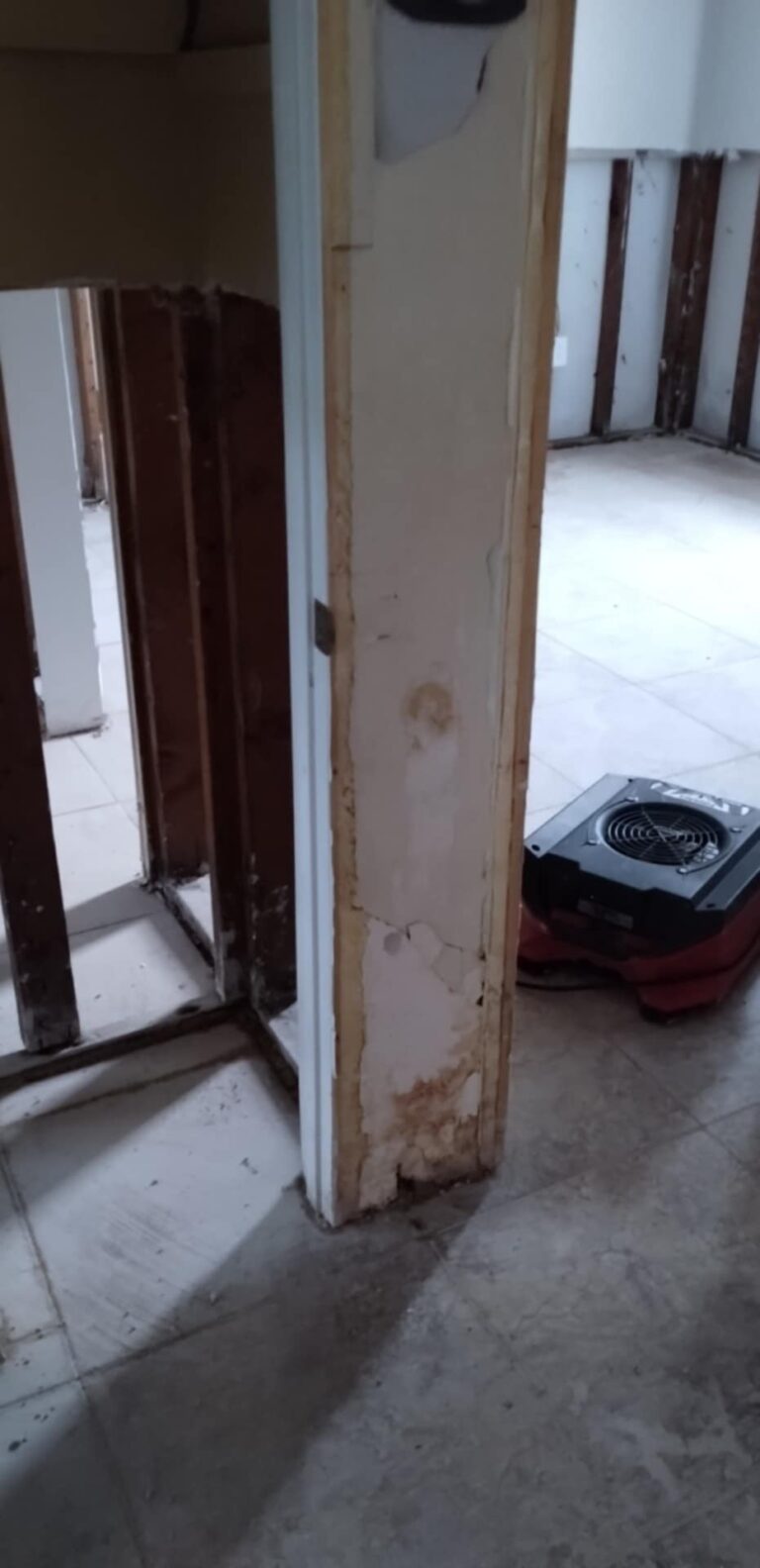
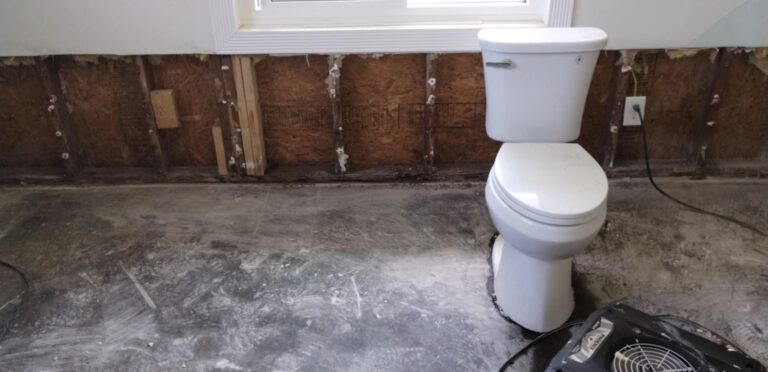
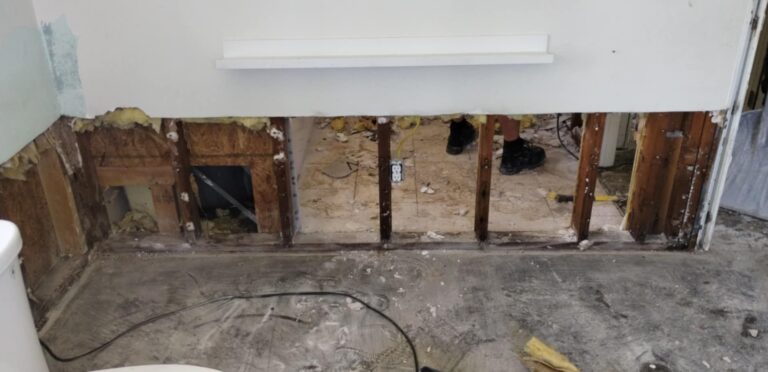
As demolition progressed, lower sections of drywall were removed to expose wall studs, bottom plates, insulation, and other concealed components. The photographs document the extent of the opened wall assemblies and the areas requiring additional drying and restoration.
The findings supported a selective demolition approach rather than complete removal of otherwise serviceable wall finishes.
Selective Drywall Removal
Affected drywall was removed where deterioration and water exposure made restoration impractical.
Selective removal is particularly useful when damage is concentrated along the lower portion of a wall. Instead of removing drywall from floor to ceiling throughout the room, technicians can establish appropriate removal boundaries based upon actual conditions.
Opening the wall assemblies also provides access to materials that cannot otherwise be adequately evaluated or dried.
In this project, the lower wall sections were opened while unaffected upper portions were retained where appropriate.
Structural Drying
Following removal of affected materials, professional drying equipment was used to address remaining moisture within the exposed areas.
Opening the wall cavities allowed airflow to reach structural components that had previously been concealed behind drywall.
Drying is an important part of water damage restoration because reconstruction should not simply conceal materials that remain excessively wet.
Conditions within the affected areas can be monitored during the drying process to determine when the structure is ready to proceed toward repair.
Evaluating Concealed Water Damage
One reason selective demolition is sometimes necessary is that the visible drywall surface does not always reveal the full extent of a water loss.
Moisture can travel laterally along bottom plates, enter adjacent wall cavities, affect insulation, or remain trapped behind finished materials.
Opening affected sections provides an opportunity to inspect these concealed areas and determine whether additional materials require removal, cleaning, or drying.
This approach bases the restoration scope on conditions encountered within the structure rather than simply on what is visible from the finished side of the wall.
Drywall Replacement and Repair
Once the affected structure was appropriately addressed, the opened wall sections could proceed to reconstruction.
Replacement drywall is installed to match the removed sections and integrated with the remaining wall surfaces. Joints and fasteners are then finished in preparation for the final coating and appearance restoration.
By retaining sound portions of the existing walls, reconstruction can remain concentrated on areas actually affected by the water loss.
Why Selective Demolition Matters
Water damage restoration should not automatically mean tearing out every wall in the room.
At the same time, minimizing demolition should never mean leaving deteriorated or excessively wet materials concealed inside a wall.
The appropriate balance comes from inspection, moisture evaluation, selective removal, and continued assessment as concealed areas become accessible.
For this garage, that meant opening damaged lower wall sections, exposing the affected structure, drying the remaining materials, and preparing those areas for reconstruction.
Restoration Timeline
Restoration Timeline
1. Inspection & Findings
Water-related deterioration was identified along multiple lower garage wall sections, with conditions extending into concealed wall assemblies.
2. Moisture Evaluation
Affected areas were evaluated to determine where water exposure and deterioration required access behind the finished drywall.
3. Selective Demolition
Damaged drywall and other materials requiring removal were taken out while serviceable portions of the wall assemblies were preserved where appropriate.
4. Wall-Cavity Inspection
Removal exposed studs, bottom plates, insulation, and concealed areas so conditions within the assemblies could be evaluated.
5. Structural Drying
Professional drying equipment was utilized to promote drying of affected structural materials and exposed wall cavities.
6. Drying Verification
Affected areas were monitored as appropriate before proceeding with permanent repairs.
7. Drywall Reconstruction
Removed drywall sections were replaced and integrated with the remaining wall surfaces.
8. Finish Restoration
Drywall finishing and associated restoration work completed the affected garage wall areas.
Scope Highlights
- Garage water damage inspection
- Inspection and findings documentation
- Moisture assessment
- Identification of concealed water damage
- Selective drywall removal
- Removal of deteriorated materials
- Wall-cavity exposure
- Structural drying
- Drying equipment placement
- Evaluation of exposed framing
- Preservation of unaffected materials
- Replacement drywall installation
- Drywall finishing
- Interior finish restoration
- Targeted water damage repair
Equipment Deployed
Project Gallery
Frequently Asked Questions
Frequently Asked Questions
Does wet drywall always have to be removed?
No. The decision depends on factors including the type and duration of water exposure, material condition, extent of saturation, accessibility, and whether the material can be effectively dried.
Why remove only the bottom portion of drywall?
Water commonly affects lower wall areas first. When conditions permit, selective removal can expose affected framing and wall cavities without unnecessarily removing sound drywall above the damaged area.
Can water remain trapped behind drywall?
Yes. Moisture can remain within insulation, framing, bottom plates, and other concealed components even when the exposed wall surface appears relatively dry.
Why use drying equipment after drywall has already been removed?
Removing drywall provides access, but remaining structural materials may still contain elevated moisture. Professional drying equipment helps move air through exposed areas and promote drying.
How do you know when reconstruction can begin?
Conditions should be evaluated during the drying process. Permanent repairs generally should not conceal structural materials that remain excessively wet.
Can only part of a drywall wall be replaced?
Yes. When appropriate, damaged sections can be removed and replaced while sound portions remain. The replacement sections are then finished into the existing wall.
Need Water Damage Repair in University Park?
Water damage that appears limited to drywall may extend into wall cavities and other concealed building materials.
ServiceMaster SRQ provides professional water damage mitigation and restoration services throughout University Park, Sarasota, Bradenton, Lakewood Ranch, and surrounding Gulf Coast communities.
Call ServiceMaster SRQ at 941-377-2455 to schedule an evaluation.
"Key Takeaway The amount of drywall removed after water damage should be determined by the actual conditions—not simply by the fact that a wall got wet. In this University Park garage, selective demolition provided access to affected wall cavities while allowing serviceable portions of the existing walls to remain. That gave technicians access to concealed structural materials for evaluation and drying before the garage proceeded into reconstruction."
Have a similar issue?
ServiceMaster SRQ provides 24/7 emergency water damage restoration, mold remediation, fire damage cleanup, demolition, and specialty cleaning throughout Sarasota and Manatee Counties. Contact us today to schedule an inspection or request emergency service.
Call 941-377-2455 NowRelated Case Studies
More Case Studies

Can Water Damage Cause Mold if It Isn’t Dried Quickly in Lakewood Ranch, Florida?
View Project →
Whole-Home Surface Mold Remediation, HVAC Cleaning, and Post-Remediation Testing – Sarasota, FL 34235
View Project →