
Do Kitchen Cabinets Have to Be Removed If Mold Is Found Under the Sink in Nokomis, Florida?
Do Kitchen Cabinets Have to Be Removed If Mold Is Found Under the Sink in Nokomis, Florida?
Kitchen Cabinet Mold Remediation
Project Quick Facts
Location
Nokomis, Florida
Service
Kitchen Cabinet Mold Remediation
Property
Residential
Cause
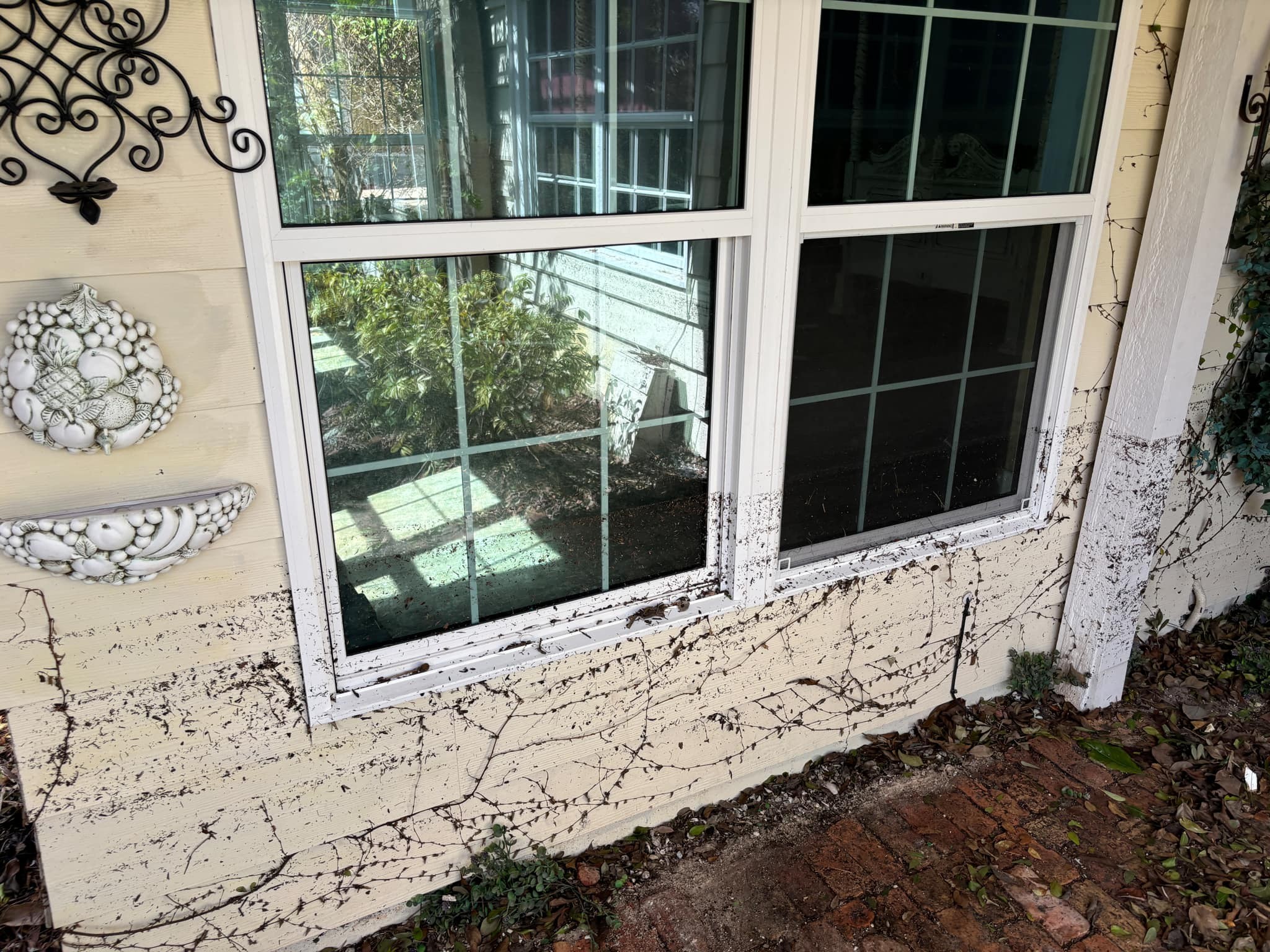
Exterior water intrusion beneath breakfast nook window
Equipment
Air Scrubbers, Dehumidifiers, Containment
PRV
Post Test Required
Short Answer
Not always. If moisture damage is limited to the cabinet bottom, it may be possible to remove only the affected panel, remediate the contaminated materials, and restore the cabinet. However, if moisture has migrated behind the cabinetry into the wall cavity, cabinet removal may be necessary so hidden moisture and mold contamination can be properly evaluated before reconstruction.
Inspection & Findings
Inspection & Findings
Every under-sink water loss begins with determining where the moisture traveled—not simply where it became visible.
ServiceMaster SRQ inspected the cabinet interiors, surrounding drywall, plumbing penetrations, and adjacent wall assemblies to evaluate the extent of moisture migration. Moisture mapping and visual inspection helped determine whether water damage had remained confined to the cabinet base or had extended into concealed building materials behind the cabinetry.
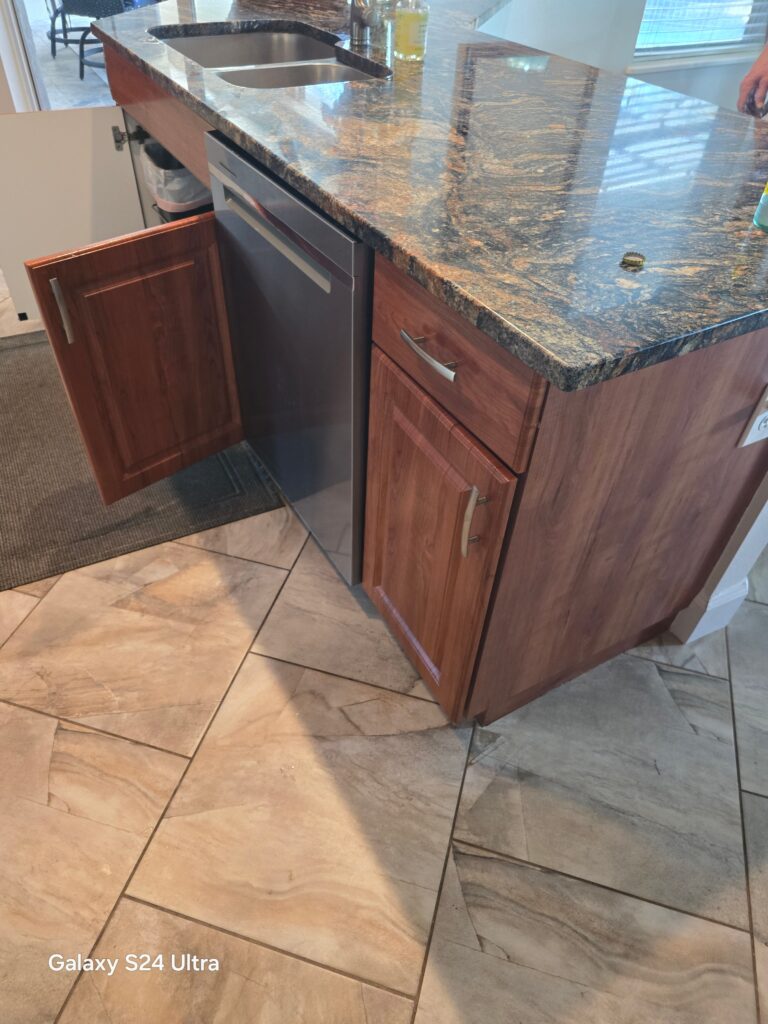
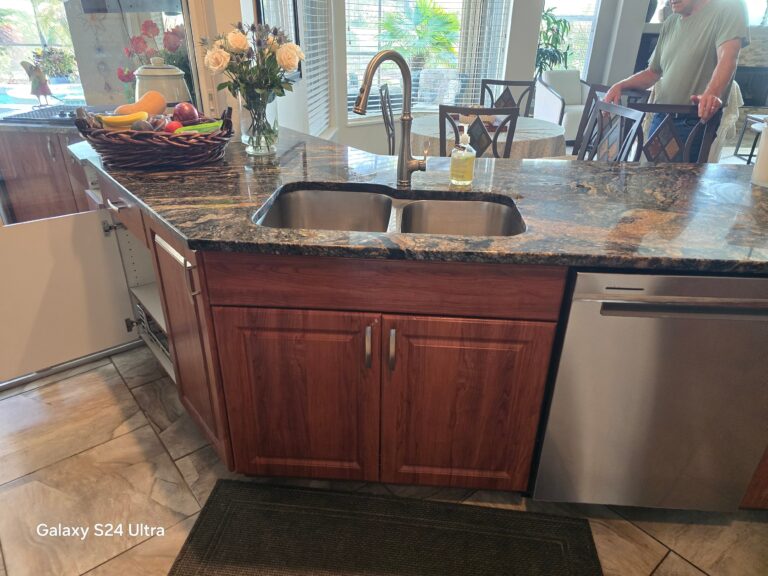
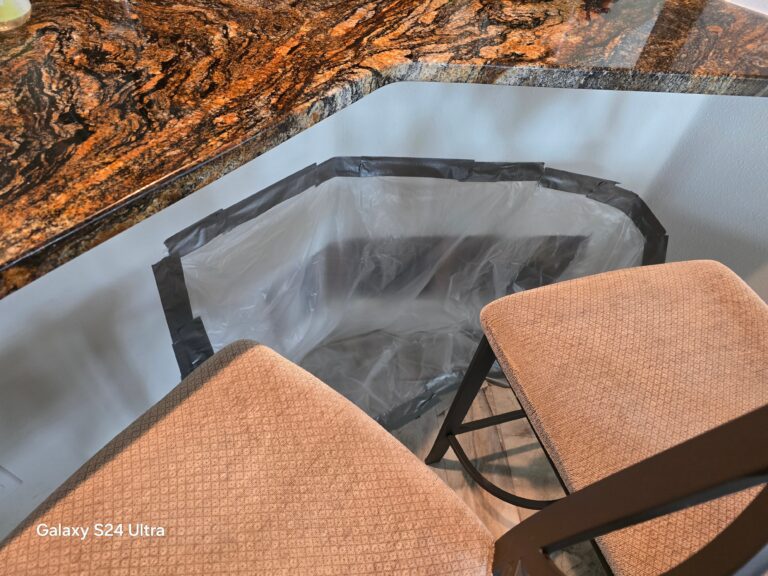
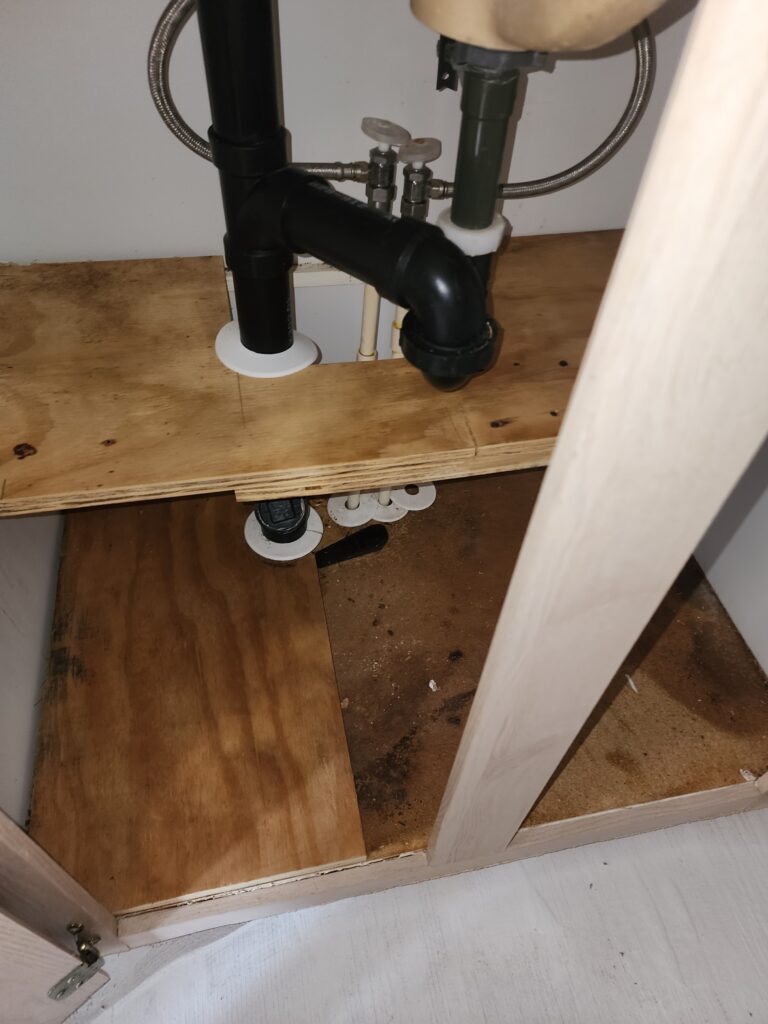
In this project, the cabinet bottoms exhibited moisture damage that required removal, while the remaining cabinet structure remained suitable for restoration. Selective demolition provided access for remediation while preserving much of the existing custom cabinetry.
Because water can migrate behind cabinets without obvious visible damage, every project requires an evaluation of concealed areas before reconstruction begins. Identifying hidden moisture early helps prevent contamination from remaining trapped behind restored finishes.
Restoration Timeline
-
Restoration Timeline
Step 1 – Moisture Inspection
The kitchen sink cabinet, plumbing area, and adjacent wall assemblies were inspected to determine the source and extent of the water damage.
Step 2 – Moisture Mapping
Moisture readings were obtained to evaluate whether water had migrated beyond the visible cabinet damage into concealed building materials.
Step 3 – Selective Cabinet Demolition
Only the damaged cabinet bottoms were removed, preserving the remaining cabinet boxes while providing access to affected materials below.
Step 4 – Mold Remediation
Affected building materials and exposed surfaces were professionally remediated following industry restoration procedures.
Step 5 – Preparation for Restoration
Once remediation was complete, the kitchen cabinetry and surrounding area were left clean, dry, and ready for reconstruction.
Step 5 – HVAC Cleaning
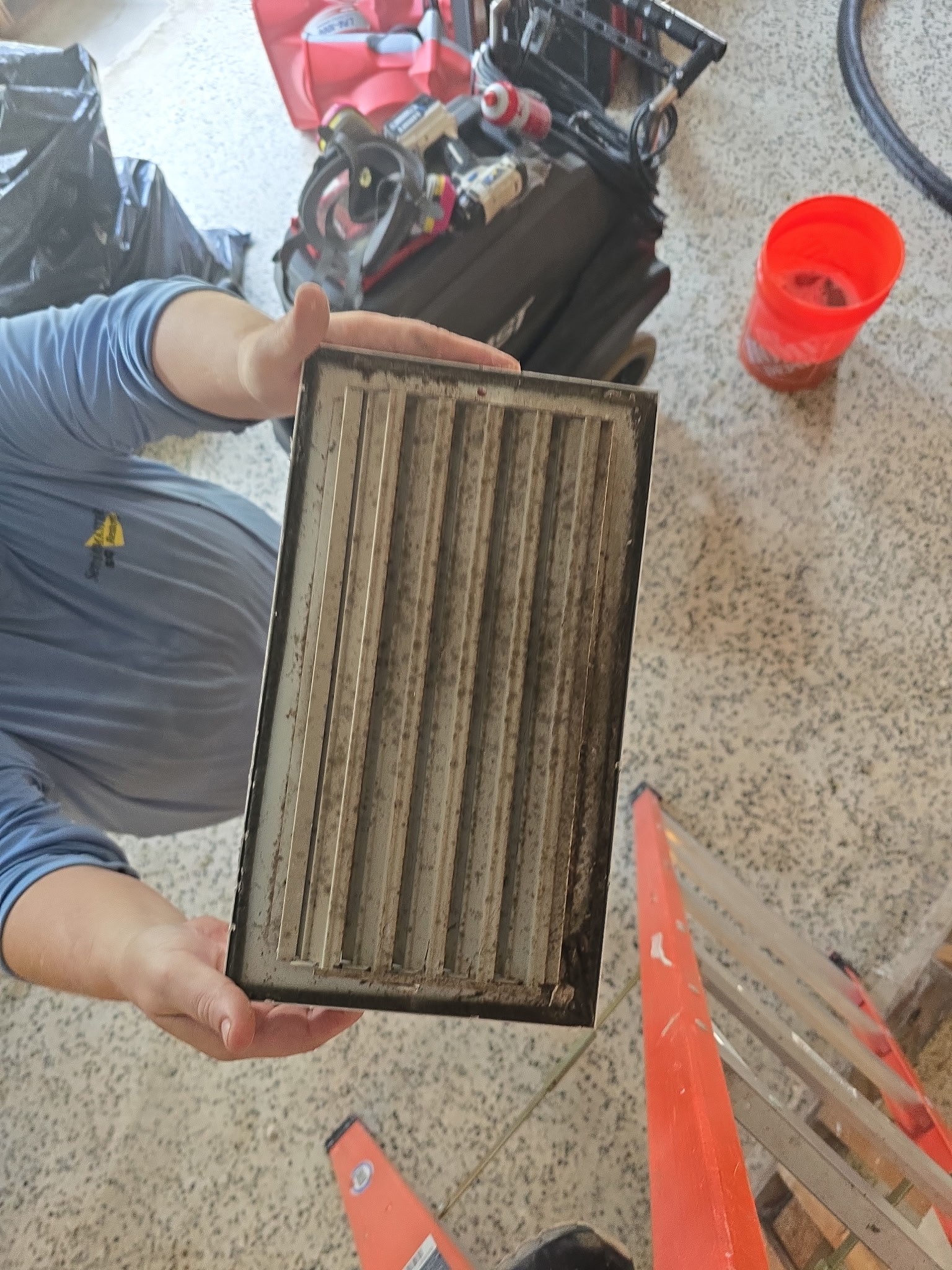
The air handler and duct system were professionally cleaned to support improved indoor air quality following remediation.
Step 6 – Reconstruction
Interior and exterior restoration work was completed, returning the breakfast nook and surrounding finishes to their pre-loss condition.
Equipment Deployed
Project Gallery

Frequently Asked Questions
Frequently Asked Questions
Do all moldy kitchen cabinets have to be replaced?
No. Depending on the extent of the damage, only certain cabinet components may require removal while the remaining cabinetry can often be preserved.
Why remove only the cabinet bottom?
If moisture damage is confined to the cabinet base, removing only the affected panel can provide access for remediation while minimizing reconstruction.
Can water spread behind kitchen cabinets?
Yes. Water frequently migrates behind cabinetry and into drywall or framing without obvious signs on the finished cabinet surfaces.
How do restoration professionals determine the extent of hidden moisture?
Visual inspection, moisture mapping, and evaluation of surrounding building materials help determine whether moisture has spread into concealed spaces.
Can mold return after remediation?
If the source of the moisture is corrected and remediation is properly completed before reconstruction, the conditions that supported mold growth have been addressed. Continued water intrusion, however, can lead to future problems.
Learn More About Kitchen Cabinet Water Damage
Water damage beneath a kitchen sink often develops gradually, making hidden moisture difficult to detect until cabinet materials begin to deteriorate. If you notice swelling cabinet bottoms, musty odors, staining, or suspect a plumbing leak, a professional moisture inspection can help determine whether water has spread beyond the visible damage. ServiceMaster SRQ uses industry-recognized restoration procedures to evaluate moisture, remediate affected materials, and prepare kitchens for successful reconstruction.
rk helps remove accumulated dust and debris associated with the remediation process and supports improved indoor air quality.
Can only part of a wall be removed during mold remediation?
Yes. When appropriate, remediation often involves selective demolition that removes only the affected building materials while preserving unaffected portions of the structure.
Why is reconstruction performed after mold remediation?
Reconstruction should begin only after remediation is complete and the affected materials have been properly addressed. This helps ensure damaged materials are not sealed behind new finishes.
Learn More About Water Intrusion & Mold
Water intrusion beneath windows often develops slowly, allowing moisture to remain hidden inside wall assemblies for extended periods. If you notice staining, soft drywall, musty odors, or suspect a leak around your windows, a professional inspection can help determine whether hidden moisture or mold is present before more extensive damage occurs. ServiceMaster SRQ follows recognized restoration and remedi
"Key Takeaway Finding mold beneath a kitchen sink does not automatically mean every cabinet must be replaced. A professional moisture inspection helps determine whether selective demolition can preserve existing cabinetry while still providing access to hidden moisture damage. Proper evaluation before reconstruction helps ensure concealed contamination is addressed rather than covered over."
Have a similar issue?
ServiceMaster SRQ provides 24/7 emergency water damage restoration, mold remediation, fire damage cleanup, demolition, and specialty cleaning throughout Sarasota and Manatee Counties. Contact us today to schedule an inspection or request emergency service.
Call 941-377-2455 NowRelated Case Studies
More Case Studies
Can Water Damage Restoration Be Completed While a Sarasota, Florida Home Is Still Occupied?
View Project →
Can Mold Grow in an Outdoor Kitchen or Covered Lanai in University Park, Florida?
View Project →