

Multiple Roof Leak Repairs and Water Intrusion Control – Longboat Key, FL
Multiple Roof Leak Repairs and Water Intrusion Control – Longboat Key, FL
Multiple Roof Leaks
Project Quick Facts
Location
Longboat Key, Florida
Service
Roof leak investigation, water intrusion assessment, roof repair, and moisture evaluation
Property
Home
Cause
Building design
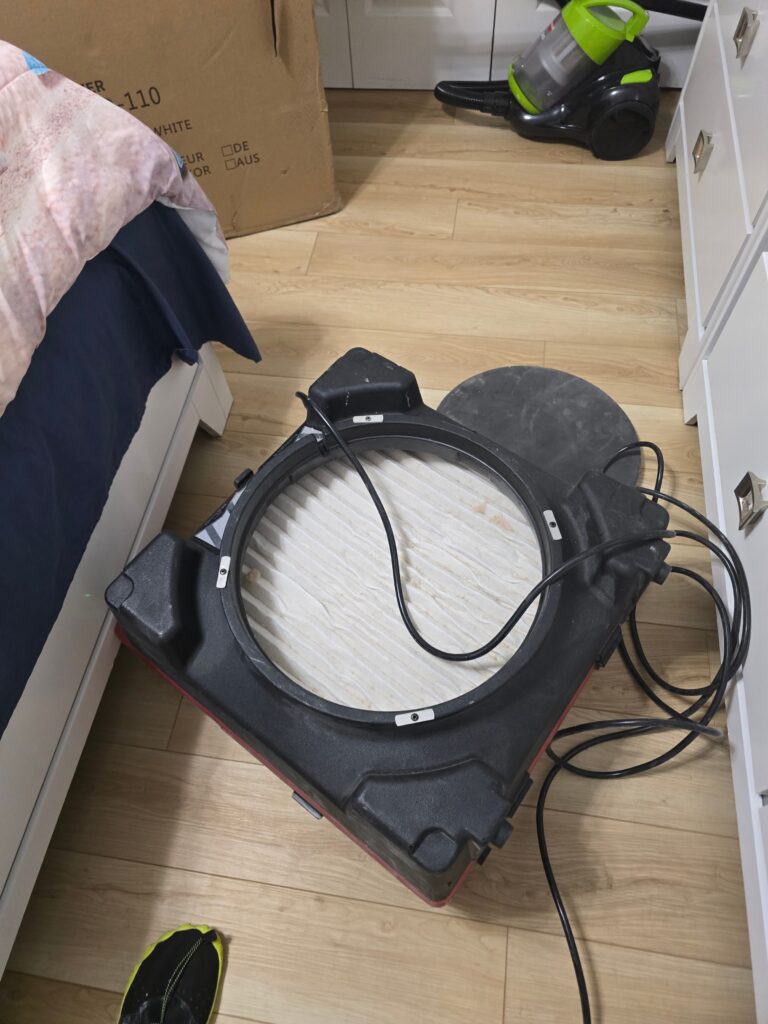
Equipment
Dehumidifiers, Blowers, Moisture Meters, Air Scrubbers
Short Answer
Yes. A roof can leak from several different locations at the same time, and repairing only the most obvious problem may not stop all of the water intrusion.
This Longboat Key project involved investigating multiple suspected leak locations, performing targeted roof repairs, and evaluating interior materials with professional moisture-detection equipment.
Inspection & Findings
Inspection & Findings
The inspection included evaluation of both the exterior roof system and interior areas where evidence of water intrusion was present.
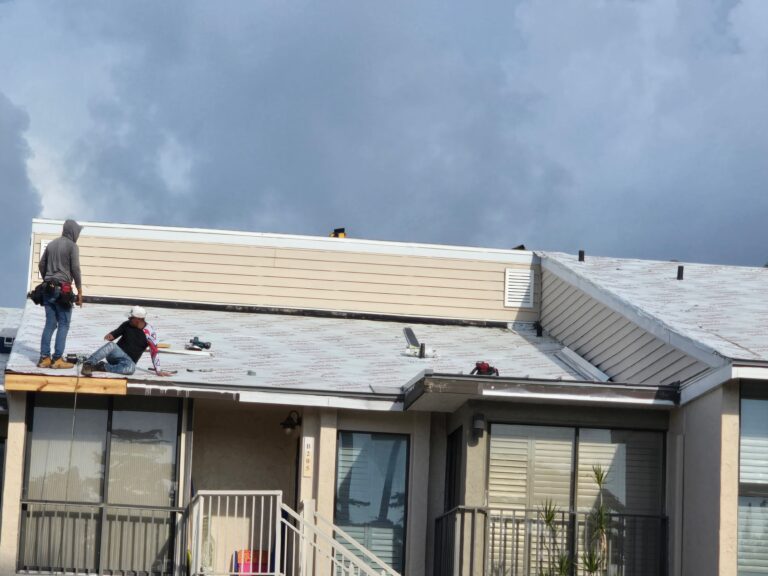
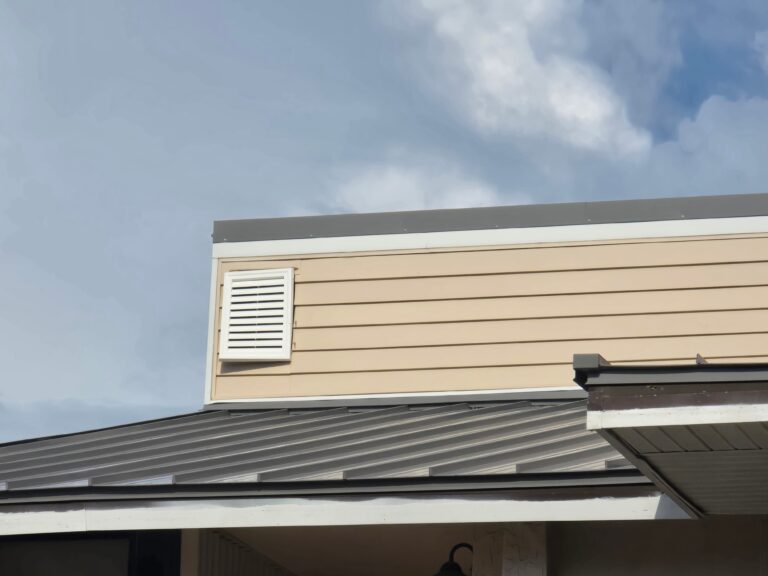
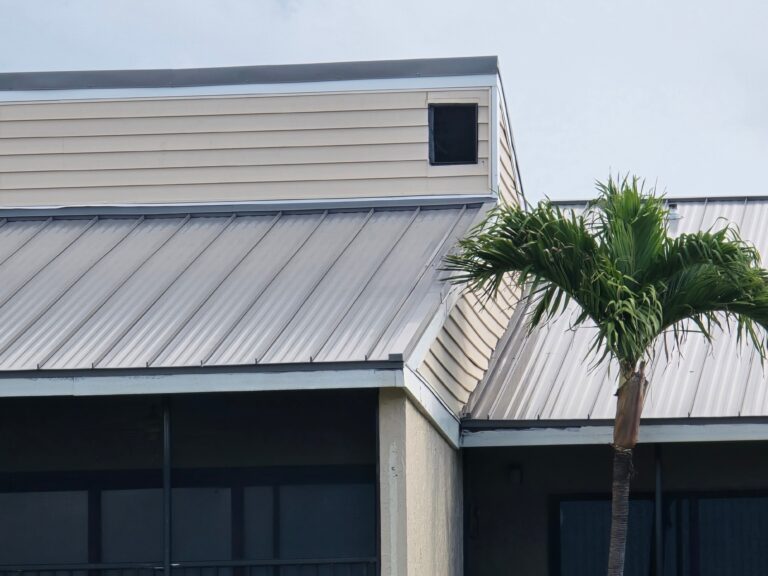
Multiple potential water-entry locations were identified rather than a single isolated deficiency. Particular attention was given to roof transitions, perimeter details, exterior wall interfaces, penetrations, and other locations where the roofing and adjacent building components meet.
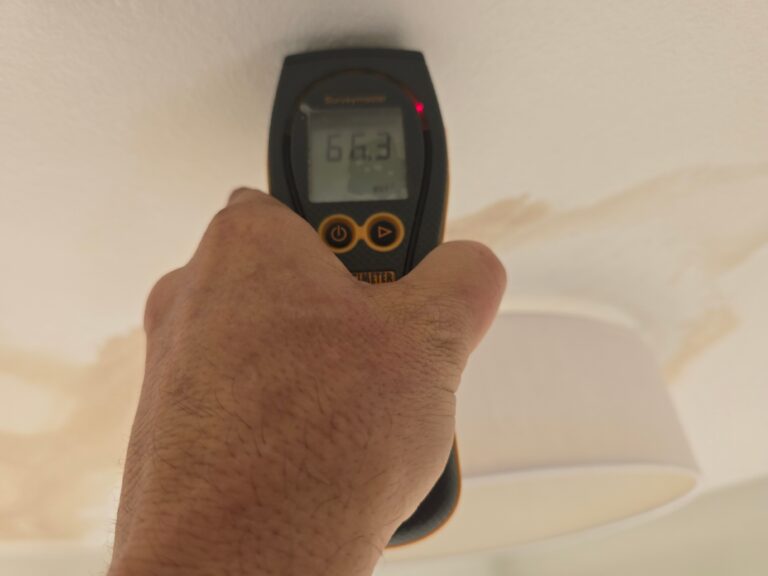
Interior inspection also identified visible staining consistent with previous or active moisture intrusion. Professional moisture-detection equipment was used to evaluate the affected area and document moisture conditions within the material.
One photograph documents a moisture-meter reading of approximately 66.3% WME at the tested location, demonstrating why interior moisture testing can be valuable when investigating a roof leak. A meter reading should be interpreted in context with the material being tested, surrounding comparative readings, and the specific instrument being used rather than treated as a stand-alone diagnosis.
The inspection findings supported a targeted repair strategy addressing the individual exterior deficiencies associated with the intrusion rather than replacing or disturbing portions of the roof that did not require repair.
Why Multiple Roof Leaks Can Be Difficult to Diagnose
Water does not necessarily appear inside a building directly beneath the location where it entered.
Once water penetrates the exterior envelope, it can travel along framing, decking, fasteners, insulation, or other building components before becoming visible inside the residence.
That means an interior ceiling stain identifies where water became visible, but not necessarily where it entered the building.
This is one reason roof-leak investigations should consider the relationship between interior damage and exterior construction rather than simply repairing the roof directly above a stain.
When several vulnerable areas exist, each one needs to be evaluated.
Targeted Roof Repairs
After the leak locations were identified, targeted repairs were performed at the affected portions of the roof system.
The objective was to correct the specific deficiencies associated with water intrusion while preserving unaffected roofing whenever practical.
This approach can be particularly valuable when the overall roof remains serviceable but isolated components, transitions, penetrations, or flashing details have failed.
Rather than treating the entire roof as defective, repairs can be concentrated where the investigation indicates they are needed.
Roof-to-Wall Transitions and Exterior Details
Roof-to-wall transitions deserve particular attention during leak investigations.
These locations combine different materials and construction assemblies and must remain properly integrated to direct water away from the building.
Flashing, siding interfaces, penetrations, edge details, and sealant conditions can all influence the ability of the exterior envelope to resist wind-driven rain.
That is especially relevant on barrier-island properties such as those on Longboat Key, where buildings are routinely exposed to heavy rainfall, wind, intense sunlight, and coastal weather conditions.
Interior Moisture Evaluation
Repairing the exterior source is only one part of a water-intrusion project.
If water has already entered the structure, affected interior materials should also be evaluated.
Professional moisture-detection equipment was used during this project to assess conditions in an interior area exhibiting water staining.
Moisture readings help technicians determine whether materials warrant additional investigation and can assist in defining the extent of affected areas.
This is important because a ceiling or wall can sometimes retain moisture even after the exterior leak has been corrected.
Why Simply Painting a Water Stain Isn't Enough
A water stain is evidence of a moisture event.
Painting over the discoloration may improve its appearance, but it does nothing to determine whether the source of the water has been corrected or whether affected materials remain wet.
The proper sequence is to first investigate the source, make necessary exterior repairs, evaluate moisture conditions, address affected materials as appropriate, and only then perform cosmetic restoration.
That prevents the appearance of the damage from becoming the focus while the underlying problem remains unresolved.
This distinction matters.
Cleaning construction dust from an occupied or furnished residence requires technicians to work around existing contents and finished materials while addressing numerous individual surfaces where particulate can settle.
The objective was therefore not simply conventional housekeeping. The cleaning scope was developed specifically around the construction-related particulate that had migrated through the residence.
Why Construction Dust Can Spread So Far
Many construction activities create extremely fine particulate.
Cutting, sanding, grinding, drilling, trimming, or modifying building materials can release dust small enough to remain airborne before eventually settling elsewhere.
Air movement within a residence can contribute to that migration. Normal movement through rooms, ceiling fans, HVAC operation, and other air currents can carry particulate away from the immediate work location.
This is one reason dust control should ideally begin before construction activities start.
Depending upon the work being performed, contractors may use localized containment, dust collection equipment, HEPA-filtered vacuums, air filtration, or other engineering controls to limit particulate migration.
Once dust has already spread throughout a furnished residence, however, the problem changes from dust prevention to detailed cleaning.
Restoration Timeline
Restoration Timeline
1. Initial Inspection
Exterior roof components and interior areas displaying evidence of water intrusion were evaluated.
2. Leak Investigation
The roof system was inspected for individual deficiencies capable of allowing water intrusion rather than assuming a single leak source.
3. Interior Moisture Evaluation
Professional moisture-detection equipment was used to evaluate affected interior building materials and document moisture conditions.
4. Identification of Multiple Leak Locations
Multiple areas requiring corrective work were identified across the roof and associated exterior components.
5. Targeted Roof Repairs
Repairs were performed at the identified leak locations using methods appropriate to the individual roof details and conditions encountered.
6. Water Intrusion Control
Exterior deficiencies associated with the identified intrusion points were addressed to improve the weather resistance of the affected roof areas.
7. Follow-Up Restoration
Interior areas affected by previous water intrusion could then be addressed based upon their condition after the exterior source had been corrected and moisture conditions evaluated.
Scope Highlights
- Roof system inspection
- Multiple roof-leak investigation
- Interior water-intrusion assessment
- Professional moisture testing
- Evaluation of roof transitions and exterior details
- Identification of individual leak locations
- Targeted roof repairs
- Repair of affected roof areas
- Exterior water-intrusion control
- Evaluation of affected interior materials
- Coordinated exterior and interior restoration approach
Equipment Deployed
Project Gallery
Frequently Asked Questions
Frequently Asked Questions
Can a roof have several leaks at once?
Yes. Different roof components can deteriorate or fail independently, resulting in multiple points of water entry. A thorough inspection is important when there is evidence suggesting more than one source.
Is the roof leak always directly above the ceiling stain?
No. Water can travel along building materials before becoming visible inside the home. The location of an interior stain does not necessarily identify the precise exterior entry point.
Can you repair individual roof leaks without replacing the entire roof?
Sometimes. If the overall roofing system remains serviceable and the problems are localized, targeted repairs may be appropriate. The condition and construction of the roof need to be evaluated before determining the proper repair strategy.
Why test the ceiling with a moisture meter?
Visible staining does not establish whether a material is currently wet. Professional moisture-detection equipment can provide additional information about moisture conditions and help determine whether further investigation is warranted.
Does a high moisture-meter reading automatically mean materials have to be removed?
No. Moisture readings are one part of the evaluation. Material type, extent and duration of wetting, condition of the material, contamination concerns, and whether the material can be effectively dried all influence the appropriate response.
Should interior water damage be repaired before the roof leak is fixed?
Generally, the source of ongoing water intrusion should be corrected before permanent cosmetic repairs are completed. Otherwise, newly repaired interior finishes could simply be damaged again.
What should I do if I see a new ceiling stain after heavy rain?
Document the affected area and have both the likely exterior source and interior moisture conditions evaluated. Waiting for a stain to dry and painting over it can conceal evidence without addressing the cause.
Have a Roof Leak or Interior Water Stain on Longboat Key?
If you are seeing ceiling stains, unexplained moisture, or recurring water intrusion, don't assume the first visible roof defect is the only source.
ServiceMaster SRQ can evaluate water intrusion and affected interior materials and help determine the appropriate restoration response for properties in Longboat Key, Sarasota, Bradenton, Anna Maria Island, Siesta Key, Lakewood Ranch, and surrounding Gulf Coast communities.
Call ServiceMaster SRQ at 941-377-2455 to schedule an evaluation.
"Key Takeaway Finding a roof leak is not always the same thing as finding the source of the roof leak. This Longboat Key project demonstrates why a comprehensive investigation can matter when water intrusion is occurring at more than one location. The exterior roof system was evaluated for individual deficiencies, multiple areas requiring repair were identified, and targeted corrective work was performed rather than assuming the entire problem originated from one point. At the same time, interior moisture testing helped evaluate the effects of the intrusion inside the property. For homeowners, the important sequence is straightforward: Find the source → repair the source → evaluate the moisture → address the resulting damage."
Have a similar issue?
ServiceMaster SRQ provides 24/7 emergency water damage restoration, mold remediation, fire damage cleanup, demolition, and specialty cleaning throughout Sarasota and Manatee Counties. Contact us today to schedule an inspection or request emergency service.
Call 941-377-2455 NowRelated Case Studies

More Case Studies
Can Original Terrazzo Flooring Be Restored During Mold Remediation in Bradenton, Florida?
View Project →
Can a Homeowner Handle a Small Mold-Remediation Project With Professional Guidance in Sarasota?
View Project →