
How Far Can Water Travel From a Leaking Toilet? A Sarasota Water Damage Case Study
How Far Can Water Travel From a Leaking Toilet? A Sarasota Water Damage Case Study
A toilet supply line leak spread water through multiple rooms of a Sarasota home, requiring selective flooring removal, exposure of concealed tile and grout, and professional structural drying.
Project Quick Facts
Location
Sarasota, Florida
Service
Water Damage Restoration, Structural Drying, Dehumidification, Moisture Monitoring
Property
Home
Cause
Water intrusion — toilet plumbing leak
Equipment
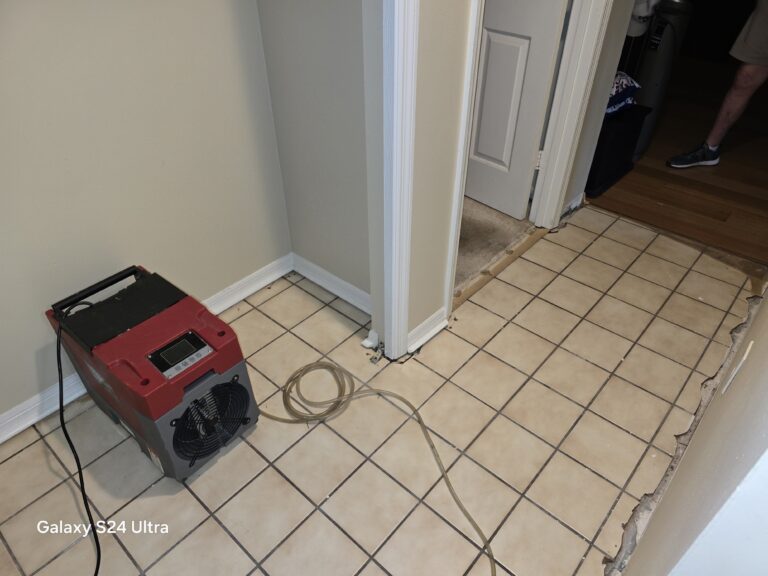
3 dehumidifiers and 8 air movers
How far can water travel from a leaking toilet? Water from a leaking toilet supply line can travel well beyond the bathroom where the leak originated, following flooring assemblies, adjoining walls, and pathways beneath floor coverings. At this Sarasota home, a leak in the spare bathroom affected the adjoining hallway, living and dining area, spare bedroom, master bedroom, master closet, and master bathroom toilet room. ServiceMaster SRQ removed affected carpet and padding to expose the underlying tile and grout, performed limited removal of floating flooring and baseboards, and established controlled drying conditions using commercial dehumidifiers and air movers. Documented moisture readings improved during the drying process, with the final drying log reporting dry structural materials on Day 4.
Understanding the Damage
Why Water Damage Can Extend Far Beyond the Original Leak
One of the most common misconceptions about residential water damage is that the affected area ends where visible water disappears. In reality, water can migrate through adjoining flooring assemblies, beneath floor coverings, and along the base of walls before the full extent of the damage becomes apparent.
A bathroom plumbing leak may therefore affect bedrooms, hallways, closets, and living spaces even when those rooms appear relatively unaffected at first glance.
This Sarasota project demonstrated how a single toilet supply leak created moisture conditions across several connected areas of the home.
Why Carpet Over Tile Can Complicate Structural Drying
An especially important consideration in this project was the flooring assembly.
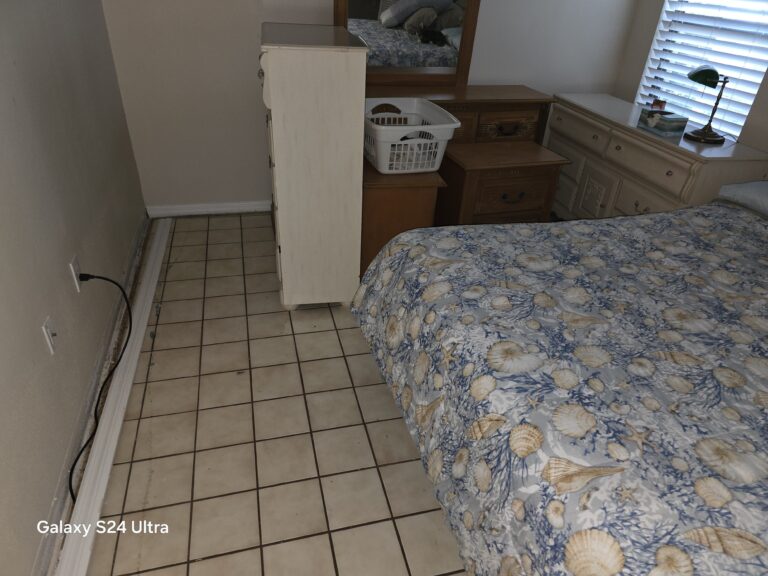
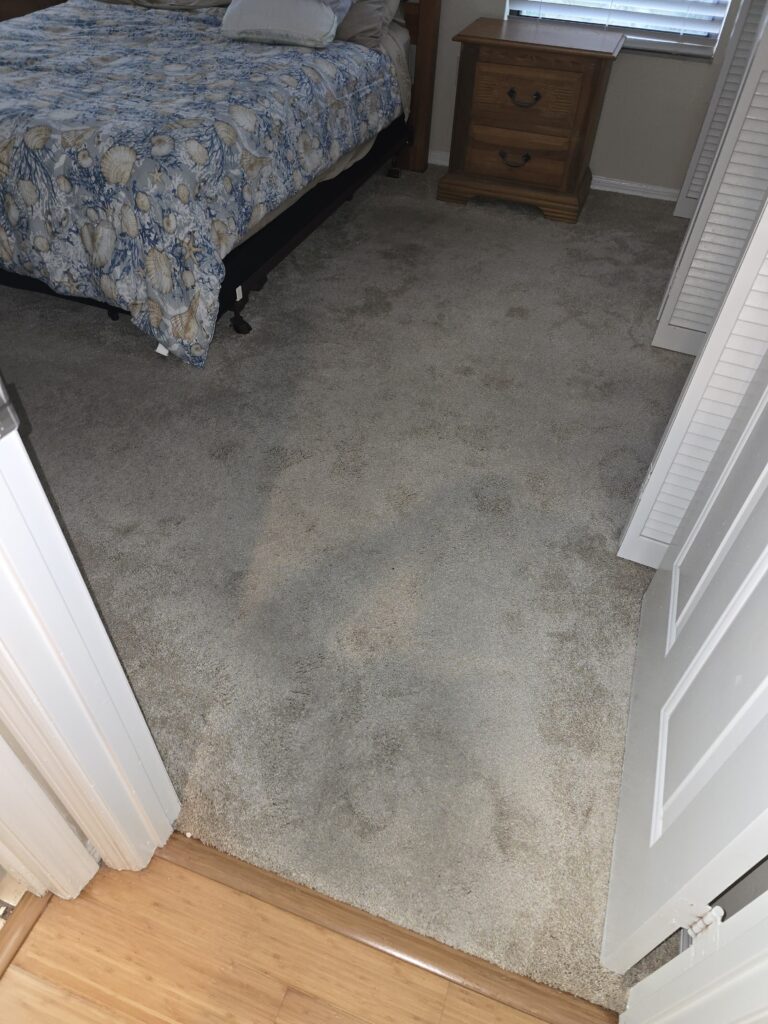
Several affected rooms had carpet and padding installed over small-format tile with numerous grout joints. Although ceramic tile itself is generally resistant to water damage, grout joints and the materials beneath or surrounding the tile can retain or transmit moisture.
Wet carpet and padding can restrict evaporation from the underlying surface. Simply directing air across the top of the carpet does not necessarily provide adequate drying conditions at the grout joints below.
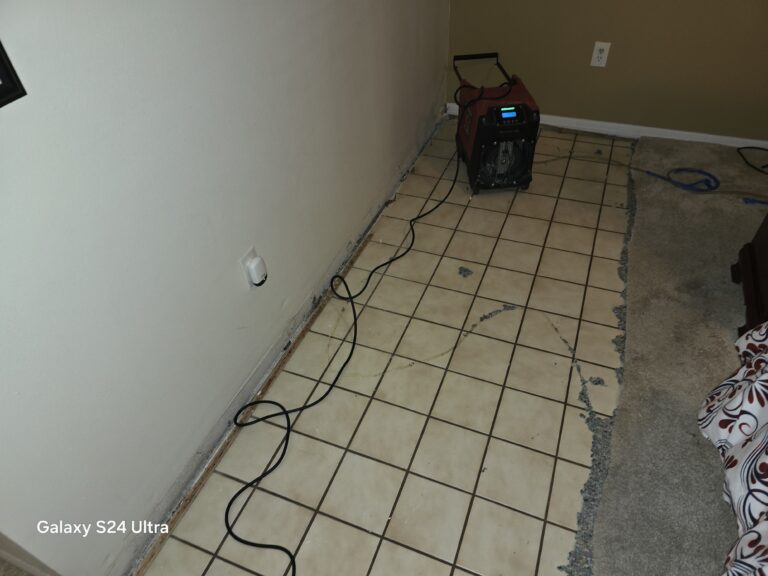
For this reason, ServiceMaster SRQ removed the affected carpet and padding to expose the tile and grout assembly. This allowed the surfaces to be cleaned and treated, provided more direct exposure to air movement, and improved access for monitoring drying conditions.
Why Controlled Drying Matters
Professional structural drying involves more than placing fans in a room.
Air movement encourages evaporation from exposed wet surfaces, while commercial dehumidification removes moisture from the surrounding air. These processes work together to create conditions that support drying.
Moisture monitoring is equally important because visible surface conditions do not necessarily reflect moisture remaining within walls or flooring assemblies.
Consistent with the principles of the ANSI/IICRC S500 Standard for Professional Water Damage Restoration, drying decisions should account for the affected materials, extent of moisture migration, and documented progress toward appropriate drying goals.
The lesson from this project is straightforward: identifying the full extent of water migration and exposing affected materials when necessary can be just as important as stopping the original plumbing leak.
Inspection & Findings
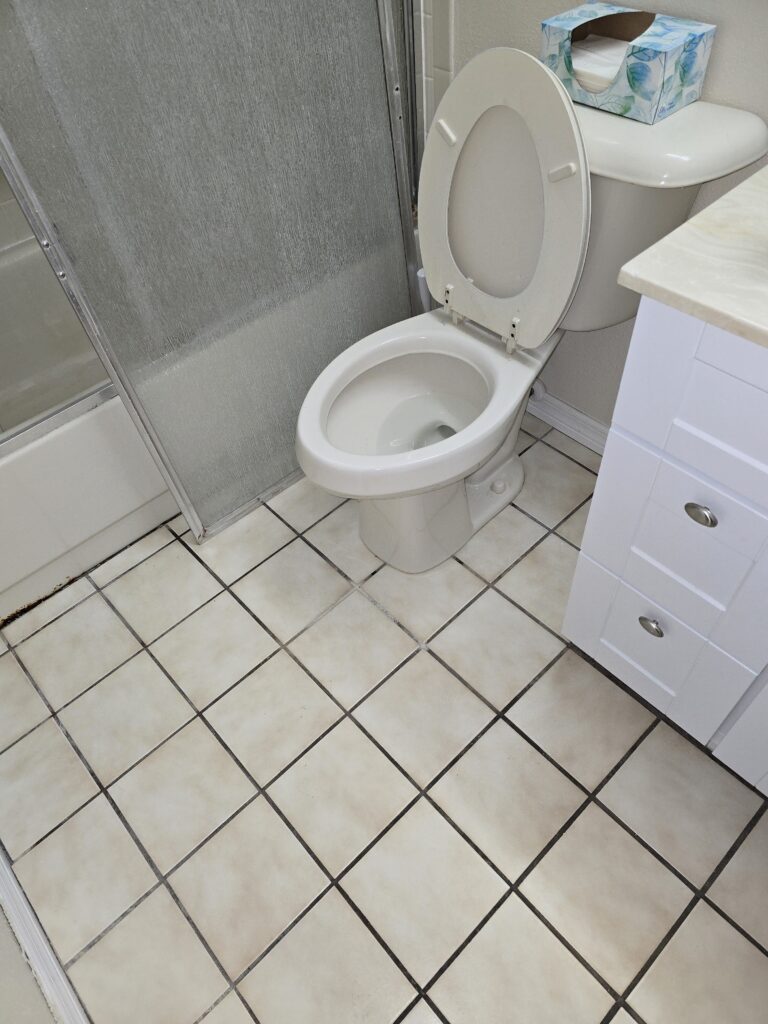
The initial inspection identified a toilet supply leak originating in the spare bathroom. Moisture assessment revealed that the water had migrated considerably farther than the immediate source area.
The documented affected areas included:
- Spare bathroom: Water affected the base of the vanity near the plumbing source. Limited access openings were included to facilitate drying of concealed areas.
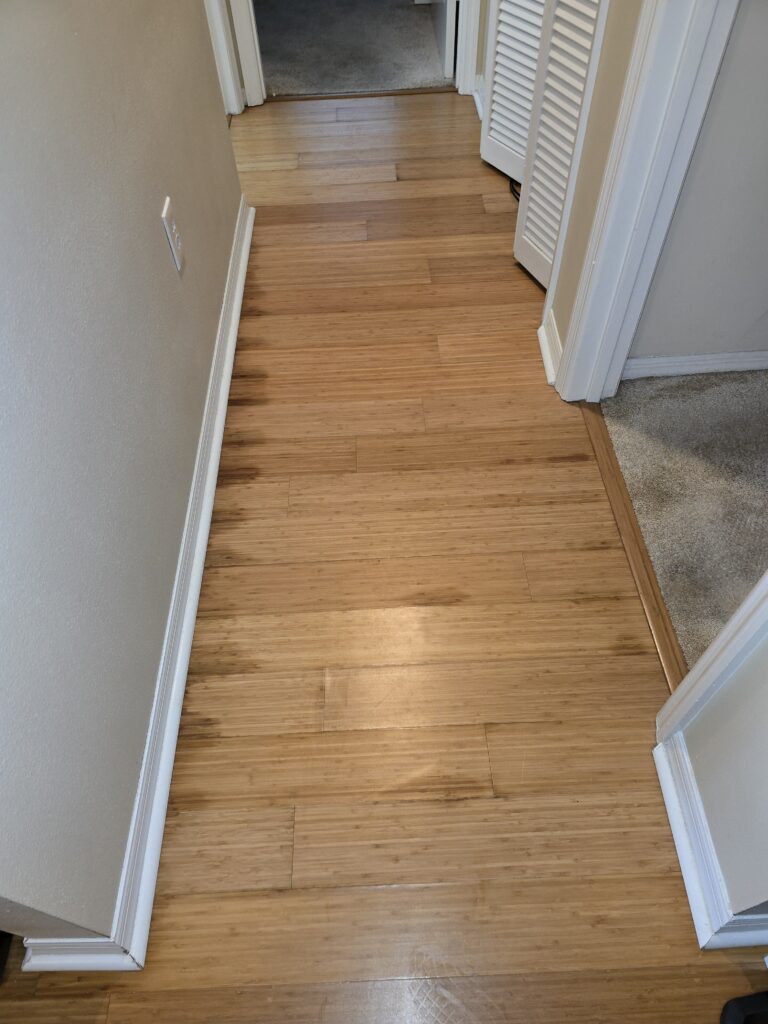
- Hallway: Moisture extended beneath portions of the floating engineered wood flooring and underlayment, requiring selective removal.
- Living and dining area: Water migrated beneath portions of the floating flooring assembly adjoining the hallway.
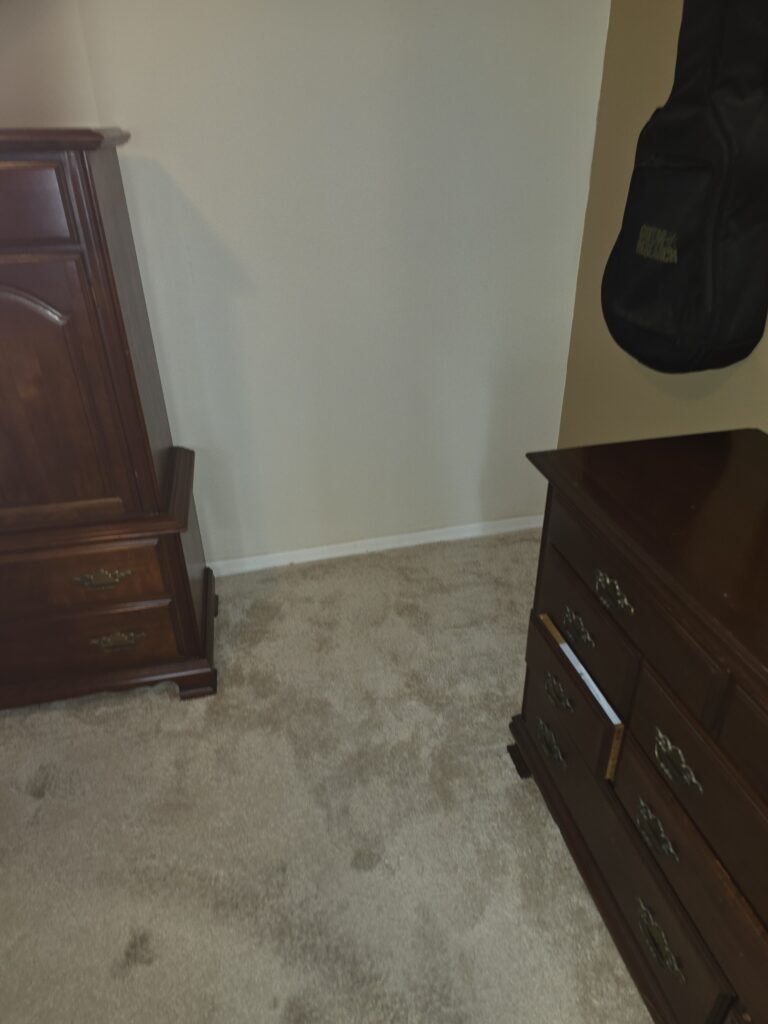
- Spare bedroom: Elevated moisture was identified in carpet, padding, and adjacent wall materials. The mitigation scope included removal of approximately 187 square feet of affected carpet and padding.
- Master bedroom: Moisture extended through the adjoining doorway and wall area. Approximately 35 square feet of affected carpet and padding were included for removal.
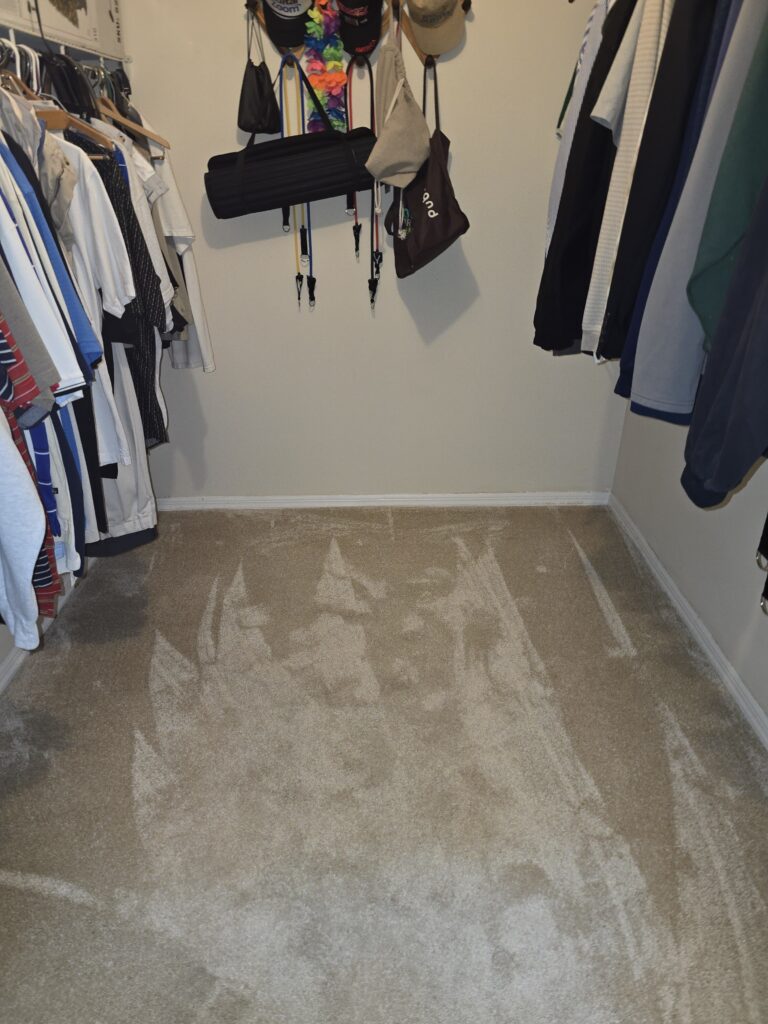
- Master closet and bathroom area: Moisture continued into the master closet and master bathroom toilet room. Approximately 63 square feet of affected carpet and padding were included for removal.
In total, the mitigation estimate documented 285 square feet of affected carpet and padding across the three carpeted areas.
The underlying tile and grout assembly was an important finding. Numerous grout joints created a surface that required direct exposure for effective drying access and monitoring. Leaving wet carpet and padding in place would have restricted evaporation from the underlying assembly.
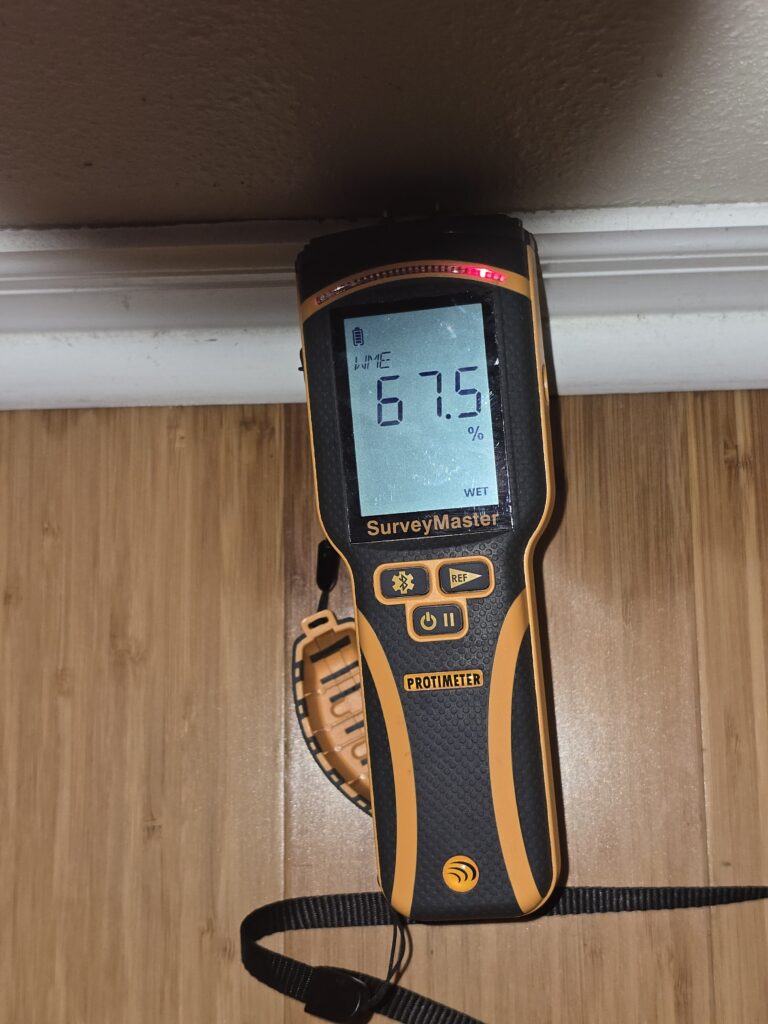
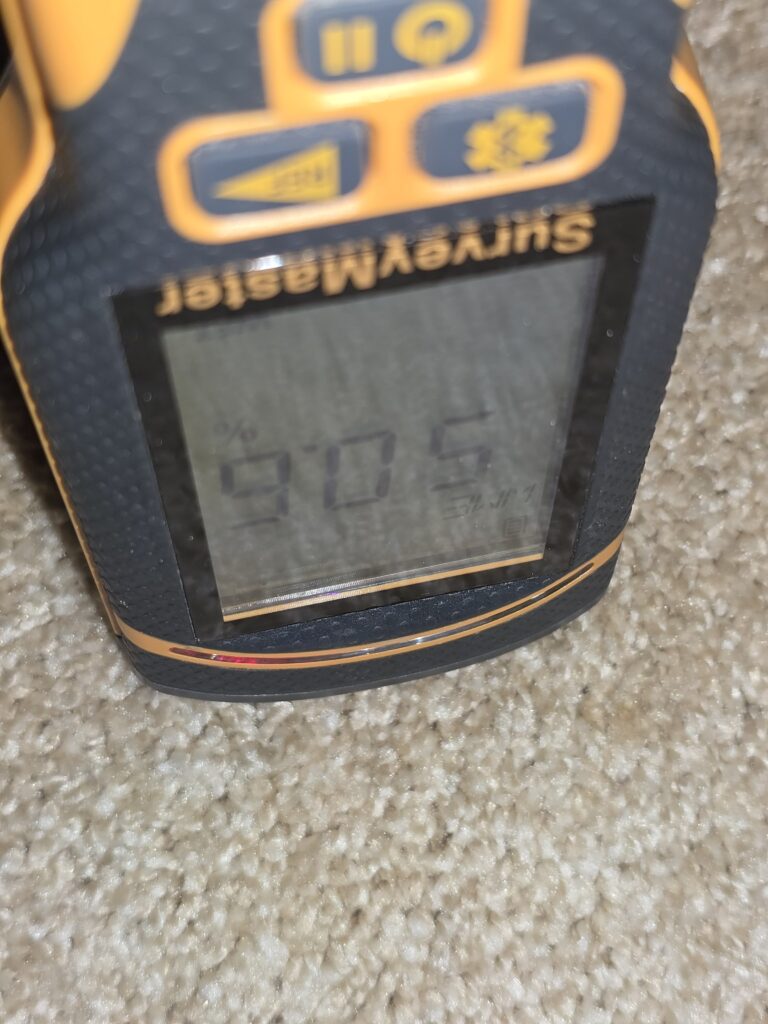
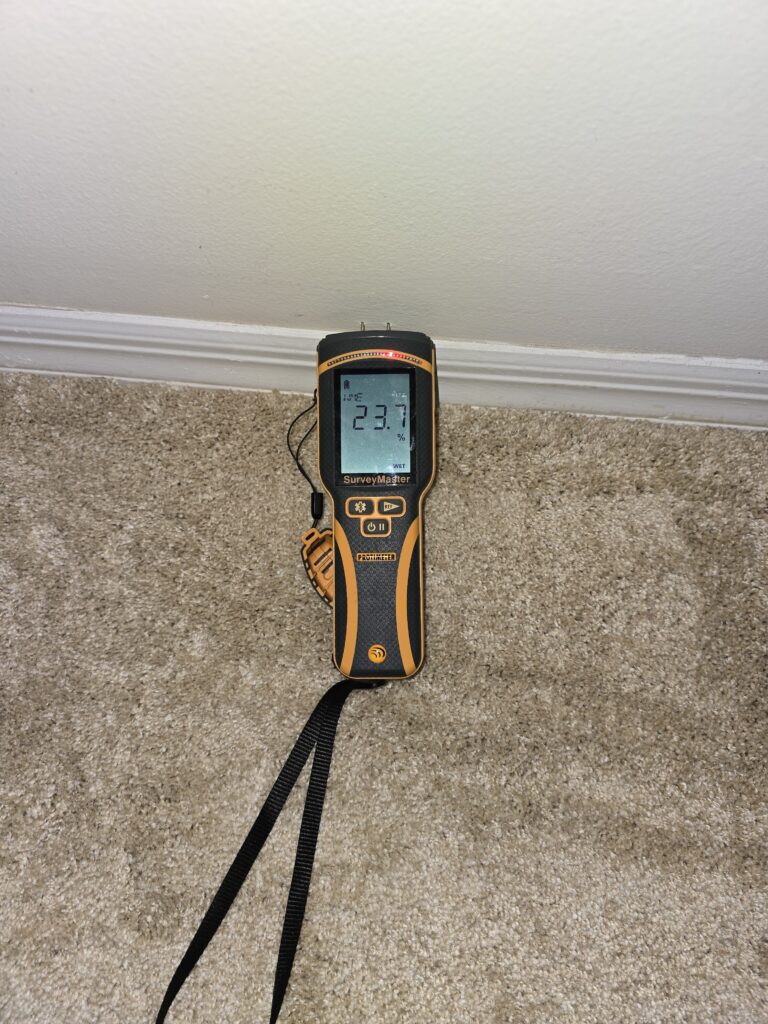
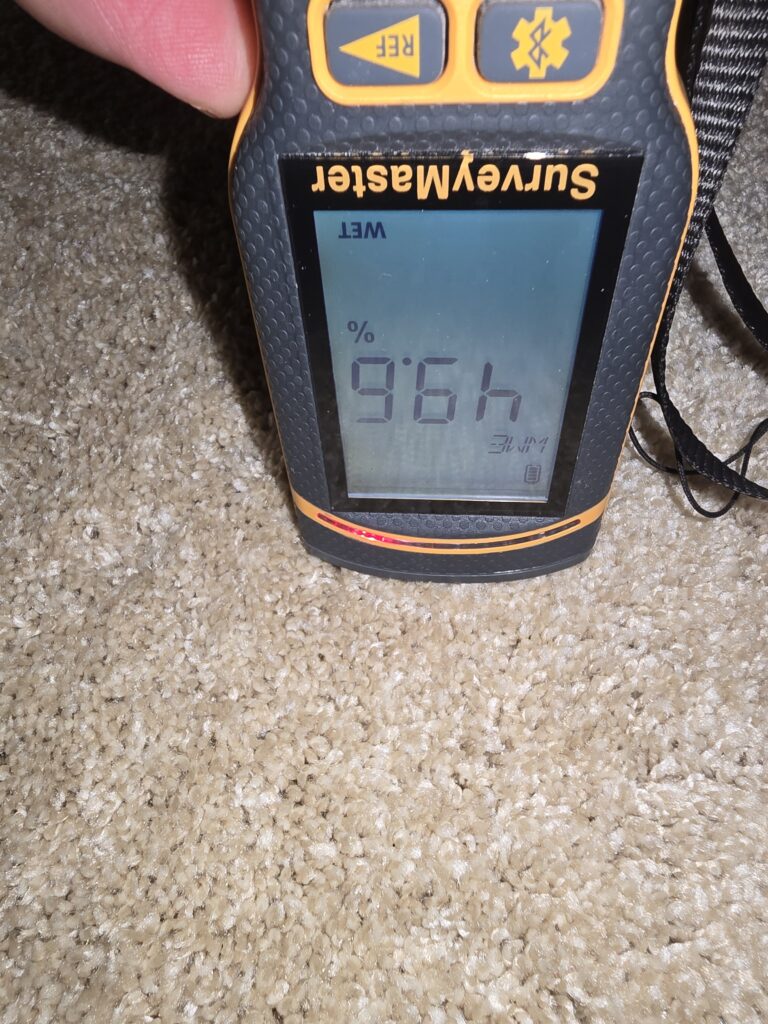
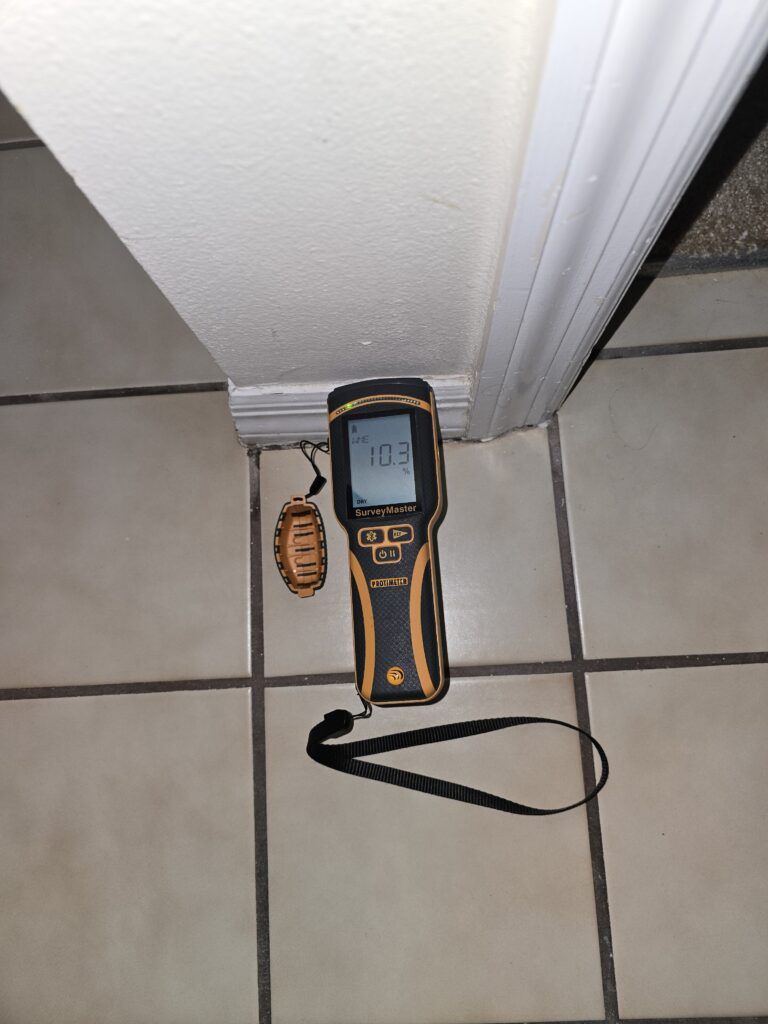
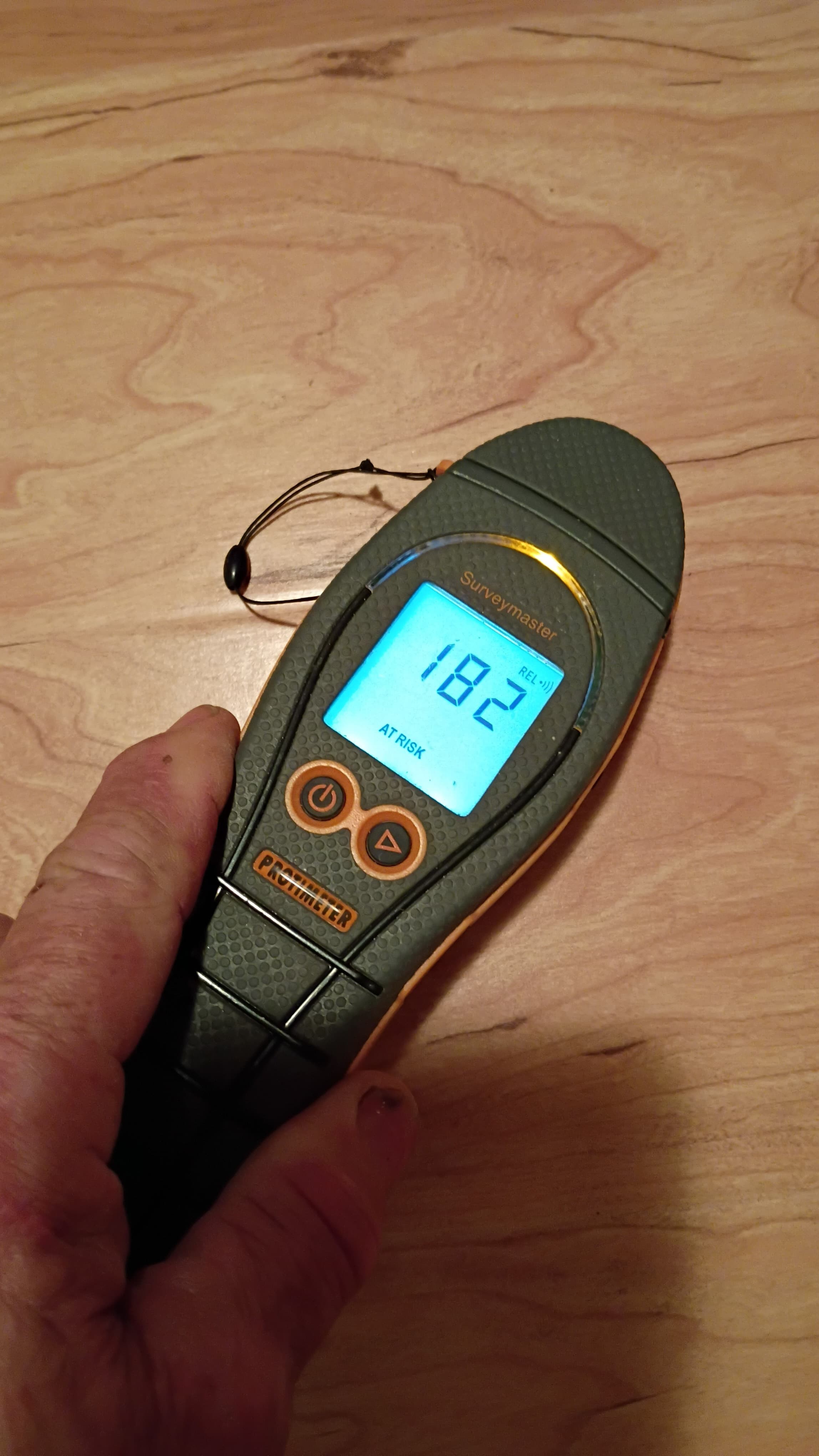
The initial Protimeter drying log recorded elevated wall moisture readings in the 50–70 range, establishing the need for continued structural drying and monitoring.
The inspection findings supported selective removal of affected materials, targeted wall-cavity access, and placement of commercial air-moving and dehumidification equipment throughout the affected areas.
Restoration Timeline
Initial Response — Inspection and Mitigation Setup
ServiceMaster SRQ inspected the property, identified the toilet supply line leak as the source, and assessed moisture migration through the adjoining rooms.
Initial moisture readings confirmed elevated conditions in affected flooring and wall materials.
The mitigation scope included moving furniture as necessary to access damaged flooring, removing wet carpet and padding, selectively removing affected floating wood flooring and underlayment, and removing portions of baseboard to improve drying access.
Approximately 285 square feet of wet carpet and padding were included for removal, exposing the underlying tile and grout assemblies.
Affected exposed surfaces were cleaned and treated, and limited openings were made where necessary to facilitate wall-cavity and vanity-area drying.
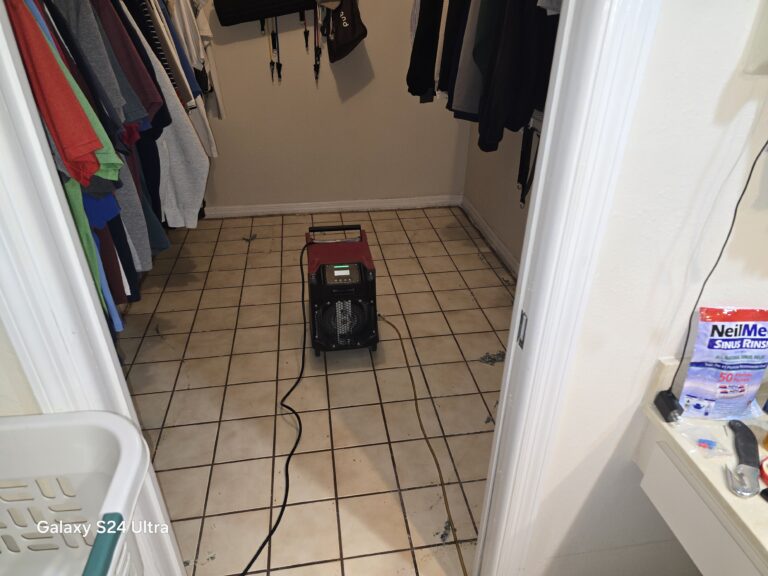
Commercial dehumidifiers and air movers were positioned to support evaporation and moisture removal from the affected structural materials.
Day 2 — Moisture Monitoring and Drying Progress
Follow-up monitoring documented substantial improvement from the initial elevated readings.
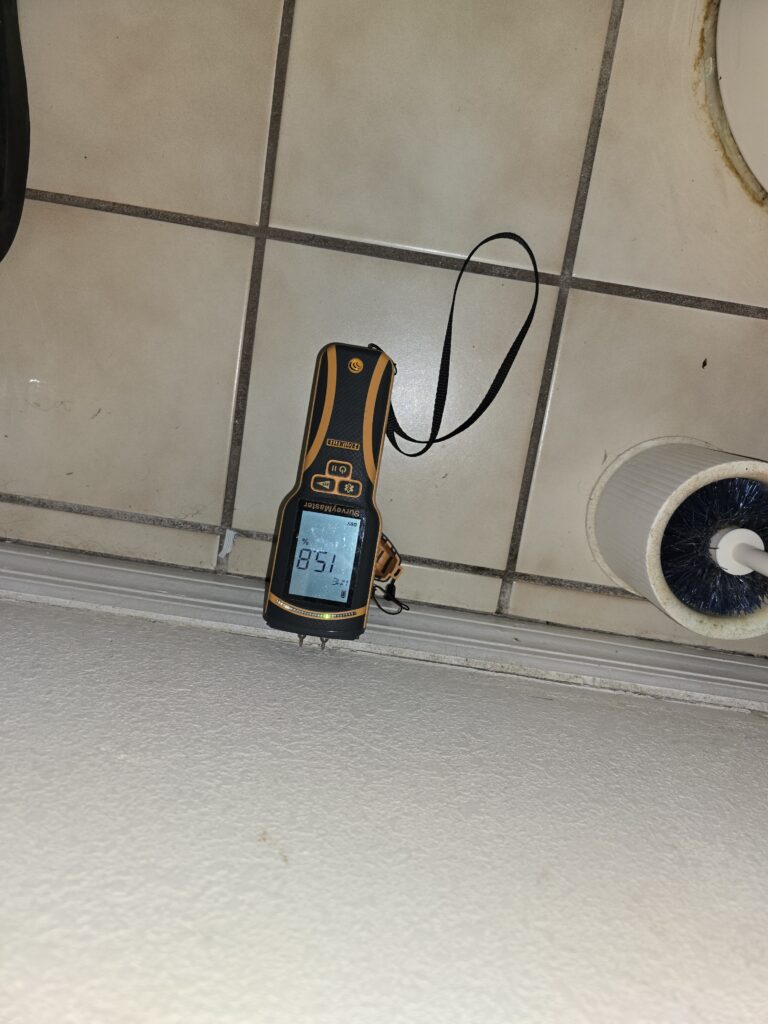
The drying records reported wall moisture readings in approximately the 14–17 range, consistent with the intermediate readings of approximately 15–20 observed during the project.
This improvement indicated that the drying process was progressing, although continued monitoring was necessary before concluding that affected materials had reached the intended drying condition.
Continued Structural Drying
Drying equipment remained in operation as needed while the affected flooring and wall assemblies continued drying.
The exposed tile and grout surfaces were accessible to direct air movement rather than being covered by wet carpet and padding.
The documented mitigation process involved approximately three days of structural drying.
Day 4 — Final Moisture Assessment
The final Protimeter drying log recorded 0% readings for the monitored structural materials, and the project documentation reported that the structure was dry.
The final assessment concluded the documented structural drying phase of the mitigation project.
The work focused on addressing moisture migration through the affected rooms while limiting material removal to the areas necessary for access and drying.
Equipment Deployed
Project Gallery
Frequently Asked Questions
How far can water travel from a leaking toilet?
Water from a toilet supply line leak can migrate through adjoining rooms, beneath flooring materials, and along wall assemblies. The distance depends on the volume of water, duration of the leak, building construction, and available pathways. In this Sarasota case, water originating in a spare bathroom affected multiple bedrooms, a hallway, living/dining areas, and adjoining bathroom and closet spaces.
Why did ServiceMaster SRQ remove the carpet if there was tile underneath?
The affected carpet and padding were wet, and the underlying small-format tile had numerous grout joints. Removing the floor coverings exposed the tile and grout to direct air movement and allowed the surfaces to be cleaned, treated, and monitored. Leaving the wet carpet in place would have restricted evaporation from the underlying assembly.
Can water travel underneath floating wood flooring?
Yes. Water can move beneath floating engineered wood flooring and its underlayment, potentially extending beyond the area where surface moisture is visible. In this project, moisture migrated beneath portions of the floating flooring in the hallway and living/dining area, requiring selective removal to provide drying access.
How long does it take to dry a home after a toilet supply leak?
Drying time depends on the amount of water, affected materials, accessibility, environmental conditions, and the effectiveness of the drying system. This Sarasota project involved approximately three days of structural drying, with the final drying log reporting dry structural conditions on Day 4. Other losses may require shorter or longer drying periods.
How can homeowners tell whether water has spread into adjoining rooms?
Visible water and staining do not always reveal the full extent of moisture migration. Professional inspection may involve moisture meters, examination of adjoining walls and flooring, and evaluation of concealed areas. When a plumbing leak occurs, assessing nearby rooms and connected flooring assemblies helps determine whether additional mitigation is necessary.
"A small plumbing leak can create extensive water damage when moisture travels beneath flooring and through adjoining building assemblies. In this Sarasota home, the water originated at a spare-bathroom toilet but migrated into multiple rooms. Removing the affected carpet and padding was essential to expose the underlying tile and grout for cleaning, direct air movement, and effective drying access. The key lesson: Successful water mitigation depends on identifying where moisture has traveled—not simply where the water first appeared—and providing the access necessary to dry affected materials properly."
Have a similar issue?
ServiceMaster SRQ provides 24/7 emergency water damage restoration, mold remediation, fire damage cleanup, demolition, and specialty cleaning throughout Sarasota and Manatee Counties. Contact us today to schedule an inspection or request emergency service.
Call 941-377-2455 NowRelated Case Studies


More Case Studies
Whole-Home Mold Remediation, Top-Down Cleaning, and HVAC Cleaning – Palmetto, FL
View Project →
How Do You Remove Construction Dust That Has Spread Throughout a Home in Longboat Key, FL?
View Project →