

Why Does DIY Mold Cleanup Vary So Much in Venice Homes?
Venice includes older homes, newer communities, seasonal residences and condos. One homeowner may have a small surface condition associated with temporary condensation. Another may have mold behind cabinets from a plumbing leak, inside a wall after roof intrusion, or throughout an HVAC system. The correct response follows the material, moisture source and extent – not simply the fact that the growth is called mold.
How Much Mold Is Too Much to Handle Myself?
There is no single visual measurement that answers every situation. Size matters, but so do material type, concealment, HVAC involvement, moisture source, occupant circumstances and how much contaminated material must be disturbed.
What Should I Photograph Before Calling a Mold Professional?
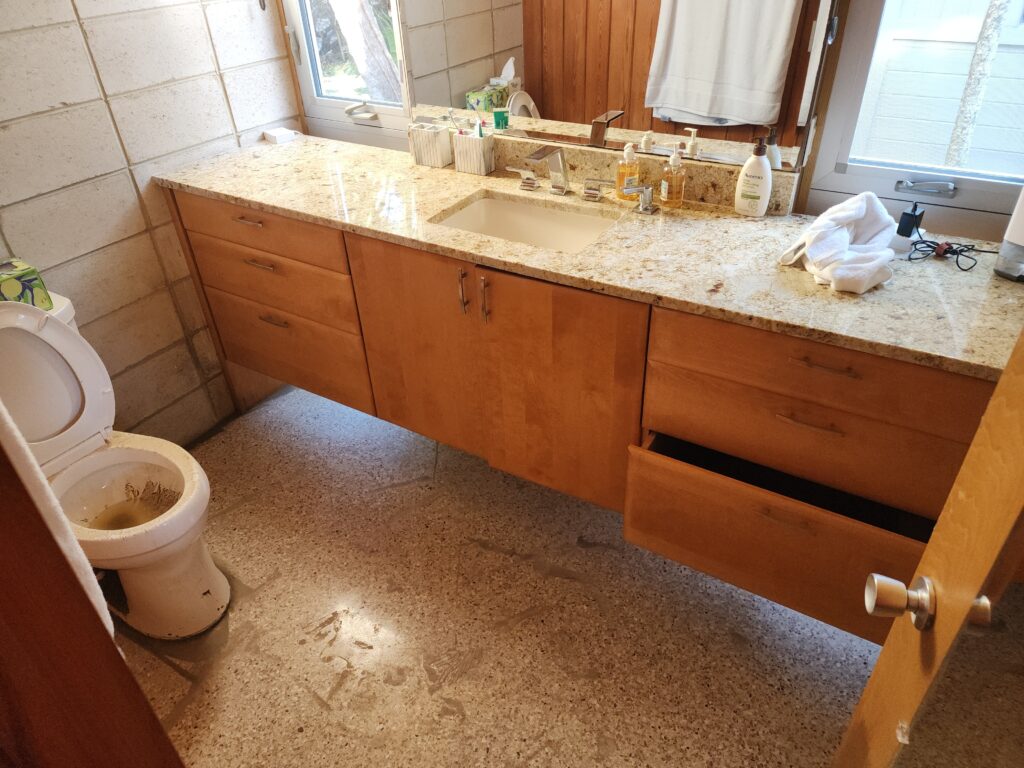
Photograph the visible growth, surrounding walls or cabinets, any staining or water damage, nearby plumbing or HVAC components, and the overall room. Good photographs can help a professional understand the situation before an on-site evaluation.
Can I Remove a Small Amount of Mold Myself?
Sometimes a very small, localized condition on an appropriate cleanable surface can be handled differently from a professional remediation project. The important questions are what material is affected, why it became wet, whether contamination is concealed and whether cleanup will disturb porous building materials.
When Should I Call a Professional Mold Remediator?
Professional evaluation becomes more important when mold involves drywall, insulation, cabinets, wall cavities, multiple rooms, HVAC components, significant moisture damage, recurring growth or a condition that requires containment and controlled removal.
Can I Just Wipe Mold Off the Wall?
Wiping may clean a superficial condition on a suitable nonporous surface, but it does not solve mold growing in porous drywall or behind the finish. Determine whether the material itself is contaminated and correct the moisture source.
Can I Spray Bleach on Mold and Be Done?
No. Bleach is not a complete remediation process. Changing the appearance of growth does not determine whether contamination remains in porous material, behind the surface or in the surrounding environment.
Can I Use a Store-Bought Mold Spray?
A product may be useful for an appropriate surface, but the chemical does not determine whether the project is successfully remediated. Source removal, physical cleaning, moisture correction and appropriate controls still matter.
Why Is DIY Mold Demolition Risky?
Cutting contaminated drywall or pulling insulation can release fungal particulate into the air and distribute debris outside the original area. Professional remediation uses containment, controlled removal and HEPA filtration when conditions warrant it.
Do I Need Containment for a Small Mold Area?
It depends upon the size, material, location and amount of disturbance. Containment becomes increasingly important when contaminated porous materials are removed or work occurs near clean occupied spaces.
What Is Negative Air and Why Would I Need It?
Negative pressure helps keep the remediation area at a lower pressure than surrounding spaces so air tends to move into containment rather than outward. It is an engineering control used on appropriate
projects.
Can I Rent a HEPA Air Scrubber and Do the Work Myself?
Equipment alone does not create a remediation plan. A HEPA air scrubber can help control airborne particulate, but the user still needs to understand containment, source removal, material handling, cleaning, moisture and completion criteria.
Does Moldy Drywall Need to Be Removed?
Significantly contaminated porous drywall often requires removal. But that does not mean every wall in the room should be demolished. The scope should follow actual contamination.
Can I Remove Moldy Drywall Myself?
You physically can, but the better question is whether doing so will spread contamination or expose concealed conditions you are not prepared to manage. Once demolition is required, professional controls become much more valuable.
Can Moldy Wood Studs Be Cleaned Instead of Replaced?
Often, yes. Structurally sound framing can frequently be remediated using HEPA vacuuming, physical cleaning, appropriate treatment, drying and detailed final cleaning.
Do I Have to Sand Mold Off Wood Studs?
Not automatically. Modern remediation products and cleaning methods can sometimes remediate appropriate structural surfaces without indiscriminately sanding every stud.
Can I Save Money by Doing Part of the Mold Work Myself?
Possibly, but coordinate with the professional first. Homeowner work that disturbs contamination, removes evidence needed by an assessor or spreads debris can increase the eventual scope instead of reducing it.
Should I Remove Cabinets Myself If There Is Mold Behind Them?
Not until you understand the contamination and moisture path. Cabinet removal can expose concealed mold and disturb affected materials. It may also damage cabinets that could otherwise have been removed and saved by an appropriate trade.
Can I Clean Mold in My Air Handler Myself?
Air handlers contain electrical and mechanical components and require controlled cleaning. A homeowner can safely photograph accessible areas if comfortable, but restoration-level cleaning around coils, blowers, wiring and electrical components is better handled by qualified professionals.
Do My Ducts Need Cleaning If I Find Mold?
Not automatically. Inspect the HVAC system. If contamination is present in the air handler, plenums, boots or ducts, cleaning may be warranted. If the system is clean, unnecessary duct cleaning adds no value.
Can I Fog My Own Ducts With an Antimicrobial?
Fogging does not replace physical cleaning. ServiceMaster SRQ physically cleans the duct system first and then uses Bioesque as an additional treatment when appropriate. Spraying product into dirty ducts is not comprehensive duct cleaning.
What Does ServiceMaster SRQ Use for Mold Remediation?
ServiceMaster SRQ uses Serum 1000/1K for appropriate structural mold-remediation applications and Bioesque Botanical Disinfectant Solution in appropriate labeled applications. Products are used as part of containment, source removal, physical cleaning and drying.
Can DIY Mold Cleanup Make the Problem Bigger?
Yes. Uncontrolled demolition, carrying contaminated debris through clean rooms, using ordinary vacuums or blowing air across contaminated surfaces can spread particulate and create additional cleaning work.
Should I Use a Regular Vacuum on Mold?
No. Ordinary household vacuums are not substitutes for appropriate HEPA-filtered remediation equipment and can redistribute fine particulate.
Can I Paint Over Mold?
Painting over contamination does not remediate it. Contaminated material should be appropriately addressed and dry before coatings or reconstruction are considered.
Can I Seal Mold Inside a Wall?
Simply closing or coating an active contaminated condition does not correct the moisture source or remove contamination. The affected assembly should be properly evaluated before it is closed.
Do I Need Mold Testing Before DIY Cleanup?
Not always for a tiny straightforward surface condition, but testing or independent assessment can become useful when the extent is uncertain, contamination is concealed or the project may require a formal remediation protocol.
How Do I Know Whether My DIY Mold Cleanup Worked?
That is one of the challenges of DIY remediation. Completion should be based on removal of contamination, cleanliness and dry conditions rather than simply whether staining disappeared. Larger projects may warrant independent verification.
What If Mold Comes Back After I Clean It?
Recurring mold usually means the moisture condition was not fully corrected, contamination remained, or a new moisture event occurred. Repeatedly cleaning the visible surface without finding the cause is not a durable solution.
What Should I Ask Before Trying DIY Mold Cleanup in Venice?
Ask yourself whether the moisture source is known and corrected, whether porous materials are affected, whether contamination is concealed, whether demolition is required, whether the HVAC system may be involved, how debris will leave the work area, and how you will determine that the remaining structure is clean and dry.
Why Choose ServiceMaster SRQ When Mold Needs Professional Remediation in Venice?
ServiceMaster SRQ provides professional mold remediation throughout Venice, Sarasota County, and surrounding Southwest Florida communities under Florida State Mold Remediator License MRSR #2226. We establish appropriate containment and air controls, remove contaminated porous materials, remediate salvageable structural surfaces, address HVAC involvement when warranted, dry remaining materials and prepare projects for independent verification when required.
Frequently Asked Questions About DIY Mold Removal in Venice
Can I clean a little mold myself?
Sometimes, depending on the surface and extent. Correct the moisture source and avoid disturbing significant porous contamination.
Is bleach enough?
No. Bleach is not a complete remediation process.
Can I remove moldy drywall myself?
Doing so can disturb and spread contamination. Professional controls become more important when demolition is involved.
Can I paint over mold?
No. Contamination and moisture should be addressed before painting.
When should I call a licensed remediator?
When contamination is significant, concealed, recurring, involves porous building materials or HVAC components, or requires controlled demolition.
Can I Remove Mold Myself in Venice, FL?
Possibly for a genuinely small and straightforward surface condition. But if the project involves porous materials, demolition, concealed contamination, HVAC components or uncertainty about the extent, professional evaluation is the safer way to determine the scope. ServiceMaster SRQ provides professional mold remediation throughout Venice and Sarasota County. Show us what you are seeing and we can help determine whether you actually need professional remediation.