

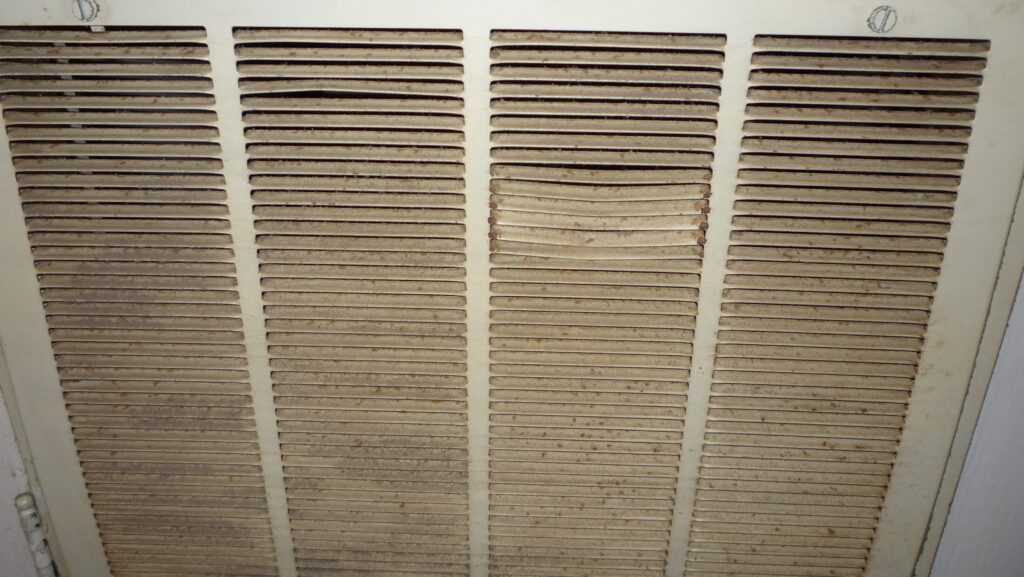
What About the Return Vent?
Return grilles can collect dust and can show dark staining from air movement. Visible dark material is not automatically mold, but moisture or suspected growth should be evaluated.
Can Dust Look Like Mold Around an AC Vent?
Yes. Airflow can deposit dust around registers, especially where air leakage occurs. Moisture, texture and growth pattern help distinguish a simple dust condition from a microbial one.
Why Is There a Black Ring Around My AC Vent?
A dark ring can be dust filtration staining, condensation-related microbial growth or a combination. The surrounding surface and HVAC conditions should be evaluated before deciding on remediation.
Can Mold Around One Vent Mean I Need Whole-House Mold Remediation?
No. One affected register does not establish whole-house contamination. The scope should follow actual evidence.
Can Mold Around Several Vents Mean There Is an HVAC Problem?
Possibly. Similar conditions at multiple registers make humidity, condensation, air leakage or HVAC-system involvement more important to investigate.
Do My Ducts Need to Be Replaced?
Not automatically. Duct material, physical condition, contamination and cleanability determine whether cleaning or replacement is appropriate.
Does Flex Duct Have to Be Replaced if Mold Is Found?
Not automatically. Inspect the interior liner and physical condition. Damaged or significantly contaminated porous duct material can be less salvageable, while clean or appropriately cleanable sections may remain.
Can Metal Ductwork Be Cleaned?
Often, yes. Sound metal ductwork is generally amenable to physical source-removal cleaning when cleaning is actually warranted.
Can I Just Fog the Ducts?
No. Fogging does not replace physical source-removal cleaning. ServiceMaster SRQ physically cleans duct systems first and may use Bioesque as an additional treatment when appropriate.
Should the Air Handler Be Cleaned Too?
If it is contaminated, yes. Cleaning ducts while leaving a contaminated air handler, blower, coil area or plenum untreated is incomplete.
What Products Does ServiceMaster SRQ Use for HVAC Cleaning?
ServiceMaster SRQ uses physical source-removal cleaning and may use Bioesque Botanical Disinfectant Solution in appropriate labeled applications after cleaning. Chemical application does not replace physical cleaning.
Can an HVAC Contractor Fix the Condensation Problem?
Yes. Mechanical performance, insulation, air sealing, supply temperature, condensate drainage and humidity control may require an HVAC professional even when mold remediation is also needed.
Who Should I Call – an HVAC Company, Duct Cleaner or Mold Remediator?
It depends on the condition. Mechanical condensation problems need HVAC correction. Duct contamination may require professional cleaning. Mold on building materials may require a licensed mold professional. One project can involve more than one trade.
Can Mold Around the Vent Come Back After Cleaning?
Yes, if the moisture source remains. Cleaning without correcting condensation, humidity, insulation or air leakage can allow the condition to return.
Does Homeowners Insurance Cover Mold Around AC Vents?
Sometimes, depending on the cause and policy. Chronic condensation or maintenance can be treated differently from contamination associated with a covered sudden loss.
How Much Does It Cost to Fix Mold Around AC Vents?
Cost depends on whether the problem is limited to a register and surrounding surface or involves drywall, multiple vents, the air handler or duct system. The correct scope should be established before pricing.
How Do I Know Whether the Ducts Are Actually Dirty or Moldy?
Inspection should show what is inside the duct rather than relying on the appearance of the room-side grille. Photos or video from accessible duct interiors can help document the condition.
Can ServiceMaster SRQ Clean the Air Handler and Ducts if Needed?
Yes. ServiceMaster SRQ provides HVAC and air-duct cleaning and is also a Florida-licensed mold remediator, allowing the HVAC condition and surrounding mold-remediation needs to be evaluated together.
Does Mold Around an AC Vent Mean There Is Mold in My Ducts?
Not necessarily. Dark spotting around a register can come from condensation, surface dust, air leakage or microbial growth on nearby drywall. The register, boot, accessible duct interior and air handler should be inspected before assuming the entire duct system is contaminated.
Why Would Mold Grow Around an AC Vent?
Cold supply air can cool the register and nearby ceiling or wall. When warm humid air contacts those cooler surfaces, condensation can develop. High indoor humidity, poor insulation around the boot or air leakage can make the condition worse.
What Is a Sweating AC Vent?
A sweating register is a vent or grille that develops condensation. The moisture can wet nearby paint and drywall and create conditions that support microbial growth if the problem persists.
Does a Sweating Vent Mean My AC Is Broken?
Not always. Condensation can result from high indoor humidity, air leakage around the boot, inadequate insulation, very cold supply air or HVAC performance issues. The cause should be diagnosed rather than guessed.
Should I Wipe the Mold Off the Vent?
Cleaning the visible grille may improve appearance, but it does not correct the moisture source or tell you whether the boot, duct, air handler or surrounding drywall is involved.
Can I Spray Bleach on Mold Around an AC Register?
Bleach is not a complete remediation strategy. The important issue is why the area is getting damp and whether porous building materials or HVAC components are contaminated.
Does the Drywall Around the Vent Have to Come Out?
Not automatically. Surface contamination on sound drywall can be different from drywall that has remained wet or is contaminated through the material. Removal should follow actual condition, not the appearance of one dark spot.
Can Condensation Cause Mold on the Ceiling Around a Vent?
Yes. Repeated condensation can keep paint and drywall damp enough to support microbial growth. Correcting humidity, insulation or air leakage is necessary to prevent recurrence.
Can Air Leak Around the Register Cause Mold?
Yes. Unconditioned humid air entering around a poorly sealed boot can meet cold supply surfaces and create condensation. Air sealing and insulation may be part of the correction.
Can Missing Insulation Around the Boot Cause Condensation?
Yes. An inadequately insulated metal boot can become cold enough for surrounding humid air to condense on it or nearby drywall.
Does High Indoor Humidity Cause Mold Around Vents?
It can. Southwest Florida humidity increases the moisture available for condensation. Reliable cooling and dehumidification are important parts of controlling the condition.
Should I Check the Air Handler If I See Mold Around a Vent?
Yes, particularly when more than one register is affected or there are other HVAC concerns. The air handler, blower, coil area, drain pan and plenums can provide important context.
If the Air Handler Has Mold, Do the Ducts Need Cleaning?
They should be inspected, but contamination in the air handler does not automatically prove every duct is contaminated. Clean the portions of the system that evidence shows are affected.
Is Duct Cleaning Enough to Fix Mold Around a Vent?
Not if the moisture source is condensation, high humidity, air leakage or inadequate insulation. Duct cleaning cannot correct a wet ceiling or mechanical moisture problem by itself.
Can Mold Inside the Duct Cause Growth Around the Register?
Potentially, but visible spotting around the register alone does not establish that explanation. Inspect the duct interior and HVAC system before attributing the surface condition to duct contamination.
Do I Need Mold Testing Around an AC Vent?
Not automatically. Inspection and moisture investigation may answer the practical question. Testing becomes more useful when identification matters, the extent is uncertain or an independent protocol is needed.
Should Every Vent Be Inspected?
If multiple vents show similar conditions, inspecting representative supply and return locations and the air handler can help determine whether the issue is localized or system-wide.
What Should I Ask a Mold or HVAC Company About Mold Around AC Vents in Manatee County?
Ask whether the dark material is on the grille, surrounding drywall, inside the boot or inside the duct; whether condensation is present; whether the boot is sealed and insulated; what indoor humidity is; whether the air handler has been inspected; and what evidence supports any recommendation for duct cleaning, drywall removal or duct replacement.
Why Choose ServiceMaster SRQ for Mold Around AC Vents in Manatee County?
ServiceMaster SRQ provides professional mold remediation and HVAC/air-duct cleaning throughout Manatee County, Manatee County, and surrounding Southwest Florida communities. We evaluate the building surface and HVAC system separately so a small condensation problem does not automatically become an unnecessary whole-house remediation or duct-cleaning project.
Frequently Asked Questions About Mold Around AC Vents in Manatee County
Does mold around a vent mean mold is inside the ducts?
No. Inspect the boot, duct and air handler before assuming system-wide contamination.
Why is my AC vent sweating?
High humidity, cold surfaces, air leakage, inadequate insulation or HVAC performance can contribute to condensation.
Does the drywall around the vent need removal?
Not automatically. The material condition and extent of contamination determine whether cleaning or removal is appropriate.
Do I automatically need duct cleaning?
No. Duct cleaning should be based on actual duct-system conditions.
Will cleaning the vent stop the mold from returning?
Not if the moisture source remains. Condensation, humidity, insulation and air leakage must also be corrected.
I Found Mold Around My AC Vents in Manatee County, FL. What Should I Do?
Photograph the condition, avoid simply painting over it, and have the moisture source and HVAC system evaluated before agreeing to a large remediation scope. ServiceMaster SRQ provides professional mold
remediation and HVAC/duct cleaning throughout Manatee County and Manatee County. Show us what you are seeing around the vent and we can help determine whether the problem is condensation, the surrounding building material, the HVAC system, or a combination.