

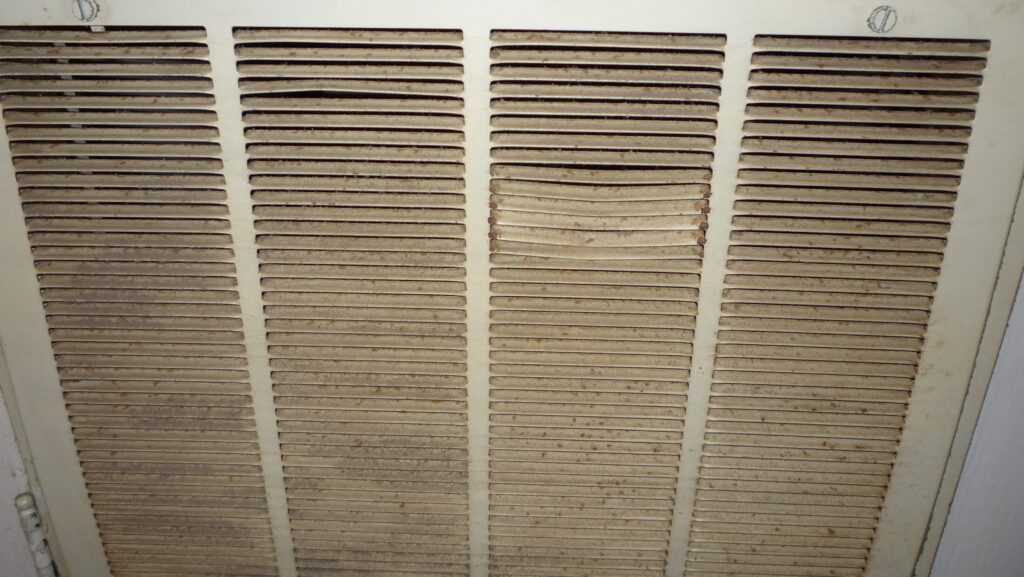
Should I Check Indoor Humidity?
Yes. Humidity readings can help determine whether the problem is localized or part of a broader whole-house moisture condition.
Could My AC Be Causing the Closet Mold?
An AC system that is not adequately controlling humidity can contribute to mold in closets and other low-airflow areas even while the house still feels cool.
Should the Air Handler Be Inspected?
It can be appropriate when multiple closets or rooms show humidity-related growth or when HVAC performance has changed.
Do My Air Ducts Need Cleaning Because There Is Mold in a Closet?
No. Duct cleaning should be based on actual HVAC-system contamination, not mold elsewhere in the home.
Should I Leave the Closet Door Open?
Improving air exchange can help reduce stagnant conditions, but it will not correct an exterior leak or a whole-house humidity problem.
Should I Run a Fan in the Closet?
Air movement may help a humidity-related condition, but it is not a substitute for controlling indoor humidity or repairing a water source.
Should I Put a Dehumidifier in the Closet?
A small dehumidifier may reduce local humidity, but first determine whether the home has a broader HVAC/humidity problem or an actual water intrusion.
Should I Move Clothes Away From the Wall?
Yes. Leaving space for airflow and inspection can help, particularly along exterior walls.
Should I Remove Cardboard Boxes From the Closet?
Cardboard is porous and can absorb moisture. Visibly contaminated boxes are difficult to remediate, while clean contents inside can often be evaluated separately.
Can Closet Shelving Grow Mold?
Yes. Wood, composite shelving, dust and stored materials can support growth under prolonged humid conditions.
Do Closet Shelves Have to Be Removed?
Not automatically. Material type, contamination, physical condition and access determine whether cleaning or removal is appropriate.
Does the Drywall Have to Be Removed?
Not automatically. Dry, sound drywall with limited surface growth is different from wet, deteriorated or deeply contaminated material.
Should the Wall Be Opened?
Only when moisture evidence, staining, leak history or other findings justify controlled access. Random demolition should not substitute for investigation.
Can Mold Be Hidden Inside the Closet Wall?
Yes. If water entered the wall assembly, the back of drywall, insulation and framing can be affected.
Does Wet Insulation Need Removal?
Wet or contaminated porous insulation may require removal. Clean, dry insulation outside the affected area does not automatically need replacement.
Can Wood Framing Be Saved?
Often, yes, when structurally sound. Framing can frequently be HEPA vacuumed, physically cleaned, appropriately treated and dried.
Does Mold on Framing Mean the Studs Are Rotten?
No. Surface microbial growth and structural deterioration are different conditions.
Should the Exterior Wall Be Inspected?
Yes when the affected closet is against an exterior wall. Stucco, windows, penetrations, sealant, roof details and sprinkler exposure can all matter.
Should I Check the Sprinklers Outside the Closet Wall?
Yes. If irrigation repeatedly hits the wall, redirect or repair it and evaluate whether an exterior defect has allowed water intrusion.
Can a Controlled Water Test Help Find an Exterior Leak?
Sometimes. Methodical testing can help isolate an entry pathway, but indiscriminate soaking can worsen damage.
Do I Need Mold Testing?
Not automatically. Visible conditions, moisture investigation and humidity data may answer the practical questions. Testing should answer a specific assessment need.
Should I Call a Mold Assessor?
For larger or regulated projects, an independent Florida-licensed mold assessor may need to define the remediation scope and completion criteria.
Can I Call a Mold Remediator Before the Leak Is Confirmed?
Yes. A licensed remediator can evaluate affected interior materials and moisture patterns while the appropriate exterior, HVAC or plumbing trade identifies the source.
Does Mold in One Closet Mean the Whole House Has Mold?
No. A localized closet condition does not establish whole-house contamination.
Does Mold in Several Closets Mean the Whole House Needs Remediation?
Not automatically. Multiple closets can indicate a broader humidity problem, but the remediation scope should follow actual contamination and affected materials.
Can Contents Cleaning Become Part of the Job?
Yes when clothing, shoes, leather goods, boxes or other stored contents are actually contaminated. Contents should be evaluated by material and cleanability.
What Does ServiceMaster SRQ Use During Structural Mold Remediation?
ServiceMaster SRQ uses physical cleaning and Serum 1000/1K for appropriate structural mold-remediation applications. Bioesque Botanical Disinfectant Solution may be used in appropriate labeled applications. Products do not replace source correction or physical remediation.
Does Homeowners Insurance Cover Mold in a Closet?
Sometimes. Coverage depends on the moisture cause, duration, policy language and mold limitations. Humidity-related growth can be treated differently from a covered sudden water event.
How Do I Prevent Closet Mold From Returning?
Correct leaks, control indoor humidity, improve air circulation, keep contents from being packed tightly against exterior walls and address sprinkler or building-envelope conditions.
Who Do I Call if I Find Mold in a Closet?
ServiceMaster SRQ can evaluate the mold pattern and moisture condition and help determine whether the evidence points toward high humidity, HVAC performance, exterior water intrusion or hidden plumbing.
Does Mold in a Closet Mean There Is a Leak Inside the Wall?
Not automatically. Closets often have limited airflow and tightly packed contents, so high indoor humidity can create growth even without liquid-water intrusion. A localized exterior or plumbing leak is another
possibility.
Why Do Closets Develop Mold So Easily in Florida?
Closets can have closed doors, little air movement, exterior walls and contents packed against surfaces. Those conditions make them sensitive to elevated indoor humidity.
What If Mold Is Only in One Closet?
One localized closet, especially on an exterior wall, deserves investigation for a window, stucco, sprinkler, roof or plumbing source in addition to humidity.
What If Mold Is in Several Closets?
Growth in multiple closets and on stored contents can point toward a broader indoor-humidity, AC or ventilation problem rather than several unrelated leaks.
Why Is Mold Growing on My Shoes?
Leather, fabric, dust and other organic residues can support growth when closet humidity remains elevated for long periods.
Why Is Mold Growing on Leather Belts, Bags or Furniture?
Leather and surface residues can support microbial growth in prolonged humid conditions. Visible growth does not automatically mean the item must be discarded.
Why Is Mold Growing on Clothing?
Textiles can develop growth or odor when stored in a humid, low-airflow environment, particularly when packed tightly.
Do Moldy Clothes Have to Be Thrown Away?
Not automatically. Many washable textiles can be laundered or professionally cleaned depending on contamination and material.
Can Mold Grow Behind Hanging Clothes Without a Leak?
Yes. Clothing can restrict airflow against a cool wall and create a localized high-humidity surface condition.
Can a Cool Exterior Wall Cause Closet Mold?
Yes. When humid indoor air contacts a cooler wall surface and airflow is restricted, surface relative humidity can become high enough to support growth.
Can a Stucco Stress Crack Cause Mold Inside a Closet?
Yes. If the closet is against an exterior stucco wall, rain or irrigation can exploit a crack or vulnerable detail and introduce moisture into the assembly.
Can Sprinklers Cause Mold in an Exterior-Wall Closet?
Yes. Repeated irrigation against the corresponding exterior wall can contribute to intrusion through cracks, windows, penetrations or failed sealant.
Can Wind-Driven Rain Cause Closet Mold?
Yes. Wind-driven rain can enter through exterior defects that may not leak during ordinary rainfall.
Can a Window Near the Closet Be the Source?
Yes. Water can enter around a nearby window and travel within the wall before becoming visible inside the closet.
Can a Roof Leak Travel Into a Closet Wall?
Yes. Roof water can follow framing and migrate into upper or exterior closet walls.
Could Plumbing Behind the Closet Be Leaking?
Yes. Bathrooms, laundry rooms or other plumbing adjacent to a closet can create concealed moisture.
How Can I Tell High Humidity From a Hidden Leak?
Look at the pattern. Similar surface growth in multiple closets suggests broader humidity, while one localized area with staining, swelling, soft drywall or elevated moisture points more strongly toward a specific water source.
Does Staining or Bubbling Paint Make a Leak More Likely?
It can. Coating failure, staining, swelling or soft drywall suggests that the material itself has experienced moisture and should be investigated.
Can the Wall Be Dry Now but Still Have Mold?
Yes. Intermittent rain, sprinklers or a repaired leak can allow materials to dry while contamination from prior wetting remains.
Can Moisture Meters Help?
Yes. Appropriate readings can identify elevated drywall, wood and other materials and help narrow areas requiring further investigation.
Can Thermal Imaging Help?
Thermal imaging can show temperature patterns that may suggest moisture or insulation differences, but it does not identify mold or prove the source.
What Should I Check After Finding Mold in a Closet in Lakewood Ranch?
Photograph the condition, move contents carefully away from the wall, check indoor humidity, note whether other closets are affected, inspect for staining or swelling, and when the closet is on an exterior wall, inspect the corresponding stucco, windows, penetrations and sprinkler exposure outside.
Why Choose ServiceMaster SRQ for Closet Mold in Lakewood Ranch?
ServiceMaster SRQ provides professional mold remediation, water-damage restoration, contents cleaning and HVAC/air-duct cleaning throughout Lakewood Ranch, Manatee and Sarasota Counties, and surrounding Southwest Florida communities under Florida State Mold Remediator License MRSR #2226. We evaluate whether the closet condition points toward humidity, HVAC performance or actual water intrusion rather than assuming every closet needs demolition or every humidity problem requires duct cleaning.
Frequently Asked Questions About Closet Mold in Lakewood Ranch
Does mold in a closet automatically mean there is a leak?
No. High humidity and restricted airflow can create closet mold without liquid-water intrusion.
What if mold is in several closets?
That pattern can point toward a broader indoor-humidity or HVAC problem.
Can sprinklers or a stucco crack cause mold in one closet?
Yes. A localized exterior-wall closet can be affected by repeated irrigation or rain entering through a vulnerable exterior detail.
Do moldy clothes and shoes have to be thrown away?
Not automatically. Many contents can be evaluated and cleaned based on material and condition.
Does the drywall automatically have to come out?
No. Removal depends on moisture, contamination, deterioration and access.
I Found Mold in a Closet in Lakewood Ranch, FL. Is It Humidity or Water Getting Into the Wall?
It could be either. ServiceMaster SRQ provides professional mold remediation, water-damage restoration, contents cleaning and HVAC/duct cleaning throughout Lakewood Ranch and Manatee and Sarasota Counties. Show us which closet is affected, whether other closets have similar growth, what is growing on the contents and what is on the exterior side of the wall. We can help determine whether the evidence points toward humidity, HVAC performance, hidden water intrusion or a combination.